Refugee Education
Education is critical for refugee children and youth. The 2030 Agenda and 2018 Global Compact on Refugees call for all forcibly displaced children and youth (including refugees, asylum seekers, and internally displaced people) to have access to inclusive, equitable, and quality education. Both stress the importance of equal access to quality education for all forcibly displaced children, youth, and their host communities, regardless of legal status, gender, or disability.
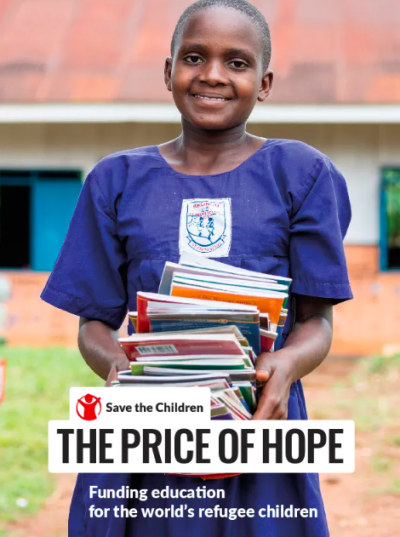
At the end of 2023, there were over 117.3 million forcibly displaced people around the world. Of the 31.6 million refugees under UNHCR’s mandate, approximately 14.8 million are refugee children of school age. Their access to education is limited, with almost half of them unable to attend school at all.
Refugee education should not be a short-term crisis intervention dependent upon unpredictable and unsustainable funding.
Who is a refugee?
According to the 1951 Refugee Convention, a refugee is someone who, owing to a well-founded fear of being persecuted for reasons of race, religion, nationality, membership of a particular social group, or political opinion, is outside the country of his or her nationality, and is unable to, or owing to such fear, is unwilling to avail him or herself of the protection of that country.
Key Messages
- Globally, 75% of children are enrolled in pre-primary, 90% in primary, 86% in secondary and 43% in tertiary education. For the 2022-2023 academic year, only 37% of refugee children were enrolled in pre-primary school, 65% in primary school, 42% in secondary school, and just 7% in tertiary education.
- Education reduces risks of forced recruitment, child labour, sexual exploitation and child marriage, among others.
- Education provides a safe place for refugee children and youth to learn and connect meaningfully with peers within the normal routine of a classroom.
- Education strengthens community resilience and equips learners with knowledge and skills to find long-term solutions.
- Education empowers refugees by giving them knowledge and skills to live productive, fulfilling and independent lives.
- Education helps refugees to become self-sufficient, enabling them to learn about themselves and the world around them, as they strive to rebuild their lives and communities.
- Lack of documents and financial resources, limited availability of schools (especially secondary) and xenophobia are some of the main reasons that prevent refugees from accessing education.