


Crisis Spotlight: Palestine
Crisis type(s): Armed conflict; food insecurity
Background
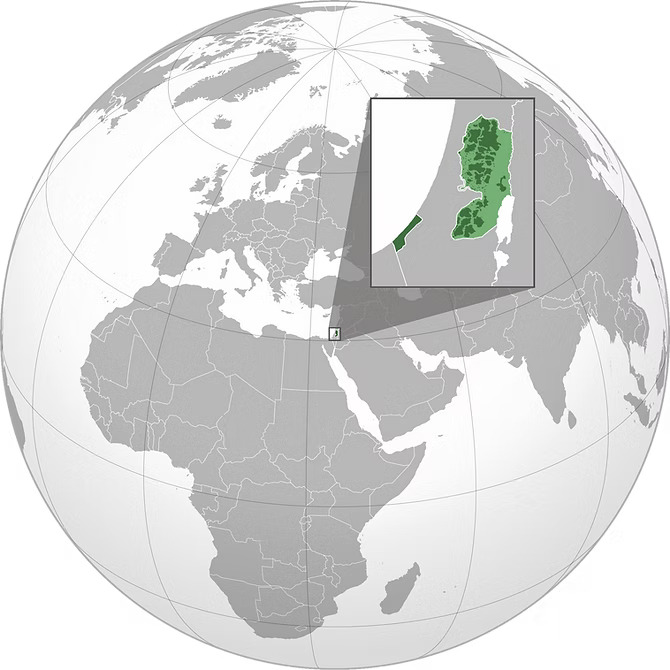
More than two years of relentless bombardment has left the education system in Gaza unrecognizable. Since the escalation of hostilities between Israel and Hamas in October 2023, there have been unprecedented attacks on education in Gaza. The systematic and deliberate destruction of schools, universities, libraries, and other education infrastructure and targeted attacks on students and educators by the Israel Defense Forces have caused some international actors to label the situation in Gaza as ‘scholasticide.’
Damaged or destroyed education infrastructure, repeated forced displacements, power and internet outages, and the burdens placed on learners to help their families secure food, water, and firewood, have interrupted education for most school-age children and youth in Gaza. Many displaced children are learning in makeshift tents, or have no access to education at all. Even if education does resume, children and youth in Gaza are still estimated to experience a cumulative learning loss of up to six years. There is a real risk of leaving an entire generation of learners behind.
- Over 660,000 Palestinian students have had their education interrupted for more than two academic years.
- According to the Palestinian Ministry of Education and Higher Education, since 7 October 2023, more than 17,237 school students, 1,271 university students, and 967 education staff in Gaza have been killed.
- 1 in 5 children in Gaza are acutely malnourished. Deteriorating humanitarian conditions and widespread food insecurity – as a result of the Israeli-imposed blockade – have led to a sharp rise in malnutrition rates, impairing learners’ physical and cognitive development and significantly diminishing their ability to concentrate and engage in learning.
- As of 1 April, 2025, 95.2% of schools in Gaza have sustained damage, and 88.5% of school buildings require complete reconstruction or major rehabilitation.
- There are 405 operational temporary learning spaces, serving around 226,400 learners. Despite this progress, demand remains extremely high, as current coverage represents only 34% of the school-aged population. The recent heavy rains have significantly affected the learning environment, with at least 25 temporary learning spaces affected, disrupting learning for 4,027 children.
- Despite the October 2025 ceasefire, providing education remains challenging. Because teaching and learning materials are not considered ‘lifesaving humanitarian aid,’ education providers have struggled to get the materials into Gaza.
Key messages
-
Schools should never be targets for attack or used for military purposes. All parties to the conflict should take all possible measures, as required under international humanitarian law, to safeguard schools, teachers, and learners.
-
Immediate education and psychosocial support is needed for children and youth in Gaza. Education actors should prepare to resume appropriate education activities once there is a sustained ceasefire, paying close attention to children’s psychosocial, cognitive, and physical health and development. In the interim, education actors should implement alternative learning solutions - such as distance learning - so children can continue to learn while displaced.
-
Immediate health and nutrition support is needed for children and youth in Gaza. Providing healthy, nutritious meals at school leads to increased enrollment, retention, supports learners’ focus, and encourages parents and caregivers to send children back to school.
-
There has been catastrophic damage to the education system in Gaza. The majority of educational infrastructure (+90%) has been damaged or destroyed. Given the widespread damage to education infrastructure, significant funding and capacity will be needed to rebuild or restore access to pre-existing and more durable housing and education structures. In the interim, investment in temporary learning spaces will allow children to resume learning while educational structures are repaired or rebuilt.
-
Children, teachers, and caregivers need significant, long-term, and careful mental health and psychosocial support. The design of learning spaces should address and enhance the social and emotional wellbeing of children. Teachers should be trained to integrate social and emotional learning into lessons, as well as to identify signs of distress and refer learners to support professionals.
-
Significant human and financial resources are needed for long-term reconstruction and to meet immediate education, shelter and psychosocial needs. Donors need to recognize the interlinked relationship between schools, shelter and psychosocial recovery in Gaza, and to prioritize actions that restore access to education that supports social, emotional, and mental wellbeing as well as educational outcomes. Thus far, only 3% of the 104 million USD flash appeal for education has been funded.
Web events
World Refugee Day Spotlight: Gaza, displacement, and the right to education - 16 June, 2025. This webinar explored the challenging realities faced by learners and educators in Gaza, highlighting the severe disruptions to education caused by the ongoing conflict and forced displacement. Panelists discussed the role of the international community in upholding the right to education in conflict-affected settings, and will propose actions needed to protect and restore education for Gaza’s children.
Psychosocial Support for Students in Gaza - April 11, 2024. This webinar focused on supporting the psychosocial wellbeing of children in Gaza. Recognizing the unique position of schools and teachers in supporting the fundamental needs of children, this webinar aimed to raise awareness of the importance of targeted psychosocial support within educational settings. This webinar also served as a call for international attention and support for the right to education in Gaza, emphasizing actionable steps that can be taken to make a meaningful difference.
Understanding MHPSS and Situational Analysis in Gaza - March 5, 2024. This webinar aimed to foster a safe space to hold a conversation around the unprecedented MHPSS situation in Gaza and catalyze efforts to address the mental health and psychosocial needs of the population affected by the conflict. The webinar featured local voices and representatives from UNRWA, UNICEF, the Education Cluster, Creative Associates International, among others.
Protecting the Right to Education in Gaza - December 20, 2023. This webinar aimed to raise awareness and advocate for the protection of educational institutions and the right to education for Palestinian learners. It sheds light on the current challenges faced by educators and learners in Gaza. It is a call for international attention and support for the right to education in Gaza, along with recommendations for actionable steps to protect educational institutions, learners, and school personnel in conflict zones. Panelists included representatives from UNRWA, the Palestine Education Cluster, the Global Coalition to Protect Education from Attack (GCPEA), teachers in Gaza, and others.
Blog series
This blog series highlights examples of good practice and innovative education programming in Gaza. This blog series is an open space for sharing opinions, resources, developments, and discussions on topics relevant to education in Gaza. If you are interested in contributing a blog to this series, please reach out to [email protected].
- Inclusive education in Palestine in the digital age: From educational equity to classroom practice. 1 April, 2026.
- Learning to Love and Hate in Gaza. 25 February, 2026.
- Redefining ‘lifesaving’: Prioritizing mental health, child protection, and education in Gaza. 5 February, 2026.
- Education Under Fire: Shaping Education for Youth Futures in Gaza. 16 October 2025.
- Attacks on Education in Palestine and Lebanon. 9 January, 2025.
- Education in a time of genocide: scholasticide and the duty of humanitarians. 18 September, 2025.
- Tents are not schools: Between dreams and displacement in Gaza. 29 September 2025.
- Education under attack in Gaza, with nearly 90% of school buildings damaged or destroyed. 16 April, 2024.
- Cinema creating opportunities for dialogue with children and young people in Gaza. 8 December, 2022.
- The bombing on Gaza has stopped for now. 2 August, 2021.
Note: The opinions expressed in the blog posts included here are those of the respective authors; they do not necessarily reflect the opinions of INEE or its members.
Resources
The following resources support the provision of education, and the psychosocial support and wellbeing of learners, teachers, and those who have been affected by the conflict in Gaza. This list will be updated, as needed.
For information on the humanitarian response in affected areas, visit ReliefWeb. To suggest resources for this crisis, or to request a customized collection of resources relevant to another crisis, contact [email protected]. For EiE technical support, submit an INEE Help Desk request here.
Standards
-
INEE Minimum Standards for Education: Preparedness, Response, Recovery Arabic, English
-
Contextualized INEE Minimum Standards: occupied Palestinian territory Arabic, English
-
Minimum Standards for Child Protection in Humanitarian Action Arabic, English
-
Guidelines for Protecting Schools from Military Use during Armed Conflict Arabic, English
-
INEE Guidance Note on Conflict Sensitive Education Arabic, English
Teachers
-
Guide: What Teachers and Administrators Can Do to Protect Education from Attack English
-
INEE Guidance Note for Teacher Wellbeing in Emergency Settings Arabic, English
-
INEE Teacher Wellbeing Guidance Note - Contextualization for Palestine Arabic, English
-
PSS-SEL Distance Education Resources for Teachers Arabic, English
-
Youm Jadeed episodes and educational guidelines Arabic, English
Child Protection
-
Supporting Integrated Child Protection and Education Programming in Humanitarian Action English
-
Communicating with Children About Death and Helping Children Cope with Grief English
-
CPHA Frontliner Getting Started Learning Package Arabic, English
-
We Thrive, English
-
What Schools Can Do to Protect Education from Attack and Military Use English
-
Operational Guidance for Child Friendly Spaces in Humanitarian Settings Arabic, English
Psychosocial Support
-
INEE Guidance Note on Psychosocial Support Arabic, English
-
PSS-SEL Distance Education Resources for Teachers Arabic, English
-
Psychological First Aid: Dealing with Traumatic Responses in Children Arabic, English
-
Communicating with Children About Death and Helping Children Cope with Grief English
-
Psychological First Aid: Dealing with Traumatic Responses in Children Arabic, English
-
Doing What Matters in Times of Stress Arabic, English
-
How to talk to your children about conflict and war Arabic, English
-
Children's Education & MHPSS needs in oPt briefing (March 2024) English
-
Impact of the conflict on mental health and psychosocial support needs in Gaza English
-
Trapped and Scarred: The Compounding Mental Harm Inflicted on Palestinian Children in Gaza English
-
Thriving through Play: A mental health and psychosocial support classroom approach for educators in crisis-affected settings English, Arabic
Early Childhood Development
Gender
-
Rapid Gender Analysis: Gendered Impacts of the October 2023 Escalation in Gaza English
-
INEE Guidance Note on Gender Arabic, English
-
EiE-GenKit Arabic, English
Inclusive Education
-
INEE Pocket Guide to Inclusive Education Arabic, English
-
INEE Pocket Guide to Supporting Learners with Disabilities English
-
Inclusive Education: What, Why, and How: A handbook for program implementers English
-
Humanitarian Hands-on Tool English
-
Always included: Uninterrupted education for children with disabilities before, during, and after a crisis (November 2023) Arabic, English
Accelerated and Nonformal Education
-
Pathways for the Return and Continuity of Learning: Gaza and West Bank Arabic, English
-
Catch-up Programmes: 10 Principles for Helping Learners Catch Up and Return to Learning Arabic, English
-
Accelerated Education Decision Tree Arabic, English
-
Accelerated Education 10 Principles for Effective Practice Arabic, English
-
Guidance on Condensing a Curriculum Arabic, English
Reports & Case Studies
-
The Gaza We Want English
-
Gaza: rethinking and decolonizing mental health responses in humanitarian emergencies English
-
Gaza Humanitarian Response | Situation Report No. 47 English
-
Gaza Education Cluster Thematic Task Forces and Working Groups English
-
Returning to learning following the ongoing war in Gaza (June 2024) English
-
Palestinian Education Under Attack in Gaza: Restoration, Recovery, Rights and Responsibilities in and through Education Arabic, English
-
Missing Futures: The Urgent Need to Protect Gaza’s Children & Safeguard their Futures English
Calls to Action
-
Urgent Appeal to Protect Palestinian Children’s Future English
-
Hostilities in the Gaza Strip Call for Action: Denial of Children´s Right to Education in Gaza English
-
A year of silence in Gaza's classrooms: the urgent need for educational revival English
INEE exists for and because of its members. We will continue to advocate and respond to disruptions in education, and will actively support those working to ensure that this right is continually guaranteed to all.
Last updated: 24 February, 2026