


Learning to Love and Hate in Gaza
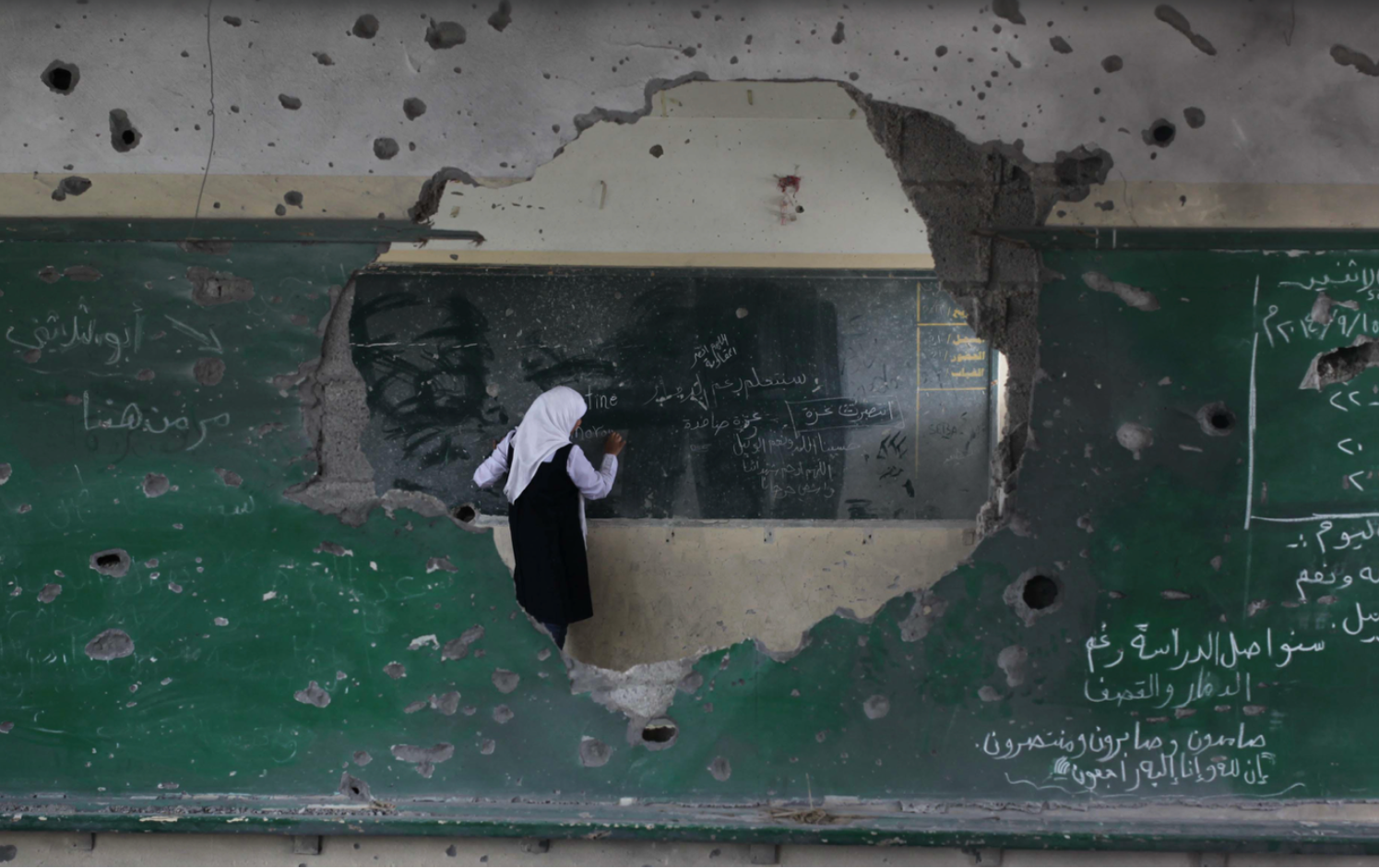
As will come as little surprise to many education practitioners working in emergencies, despite decades of investment in peacebuilding programming, armed conflicts continue to proliferate. Education remains one of the central peacebuilding tools in conflict-affected settings, grounded in the belief that increased schooling will cultivate mutual understanding and mitigate violence. Yet even in contexts that have received substantial educational investment, support for violence routinely persists—and at times has increased dramatically. To confront this incongruity, and ultimately help education fulfill its potential, it is imperative to engage directly with students growing up amid conflict to better understand what is actually happening.
To help illuminate this issue, Learning to Love and Hate in Gaza takes a deep dive into how formal education and lived experiences shaped attitudes toward political violence in post-Oslo Gaza. More specifically, it interrogates why the Oslo Accords—which mandated that Palestinian schooling foster nonviolence and mutual understanding—ultimately achieved neither. Building on a longstanding tradition of external stakeholders manipulating local curricula for partisan gain under Ottoman, British, and Israeli rule, this inquiry highlights how American pressure applied to the inaugural Palestinian national curriculum developed in the post-Oslo era fundamentally compromised its worth. While some actors were pleased with its prosaic composition and fealty to the Palestinian Authority, many students were increasingly frustrated by its perceived irrelevance to the conflict they were living.
Drawing on extensive qualitative fieldwork and longitudinal engagement with Gazan students throughout the core of the post-Oslo era, this research centers young people as active learners within a highly contested environment. It highlights how students encountered not only formal textbooks, but also powerful pedagogical influences from family narratives, peer networks, media, and the daily realities of recurring violence. These layered influences interacted with—and often contradicted—the peace-oriented curriculum offered in school, leading many students to implore educational stakeholders to “stop lying” to them.
For professionals supporting education in emergencies, the implications are clear: expanding access to formal education amidst conflict is constructive but, in itself, insufficient to cultivate peace. Students are not passive recipients of official narratives; they are discerning actors navigating complex political realities every day. Effective educational programming therefore requires acknowledging this reality and openly addressing the direct and structural violence that shapes students’ lives. This approach may unsettle donors and provoke resistance from partisan stakeholders—but the alternative is to alienate the very young people who are central to building a more peaceful future in Gaza and beyond.
The full research is available here: https://inee.org/resources/learning-love-and-hate-gaza
About the Author:
 Patrick McGrann, PhD is a research practitioner whose work focuses on how individuals and communities make sense of violence within protracted conflict. Through ethnographic fieldwork in rural Colombia, Gaza, northern Nigeria, and other contested settings, he engages directly with marginalized and often maligned stakeholders to better understand how people across divides interpret conflict—and how those lived realities can inform more grounded policy and practice.