


Crisis Spotlight: Sudan
Crisis type(s): Armed conflict; environmental disaster (floods); epidemic (cholera); food insecurity
Background
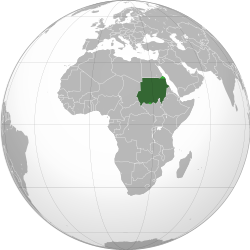 Sudan is experiencing one of the world’s largest and most under-reported education crises. Since the escalation of conflict between the Sudanese Armed Forces (SAF) and Rapid Support Forces (RSF) in April 2023, the country has witnessed mass displacement, widespread destruction of infrastructure, and the near-total collapse of basic services—including education. Entire communities have been uprooted, with schools damaged, occupied, or converted into shelters, and education has been disrupted for millions of children with neither party appearing to prioritize learners returning to education.
- An estimated 17-19 million children were either out of school or had their education disrupted. Fewer than one-third of schools have reopened, and 8 million children remain out of school. This crisis has struck an already fragile education system.
- At least 10,400 schools are closed or non-functional due to insecurity, destruction, occupation, or lack of teachers. More than 2,000 schools are currently being used as shelters for internally displaced people (IDPs). There is a complete absence of formal education in the western and southern parts of the country.
- Teachers in 10 states have received only partial payment since the onset of the war in April 2023. Teachers in 8 states have not been paid at all, severely undermining the system’s capacity to retain qualified education personnel.
- More than 45% of the population – over 21 million people – are suffering acute food shortages. In North Darfur, more than half of young children are malnourished – one of the highest rates ever recorded worldwide.
- Teachers and learners are experiencing profound trauma, yet teachers have limited training or support to address mental health and psychosocial needs in classrooms and learning spaces.
- Women and girls are disproportionately affected, facing heightened risks of sexual and gender-based violence, and exclusion from learning.
"Do not merely study our ruins; map our resurrection. Trace the invisible network of teachers holding class in the dark, measure the impact of a cash stipend on a displaced educator's ability to protect and teach, and document how traditions like the khalwa are merging with innovations like TaRL [Teaching at the Right Level]. The evidence you gather now will determine whether the world sees only a crisis to manage, or a nation rebuilding itself from within."
- Yousif Mohammed Haroun Kafi, LM International
Call to Action
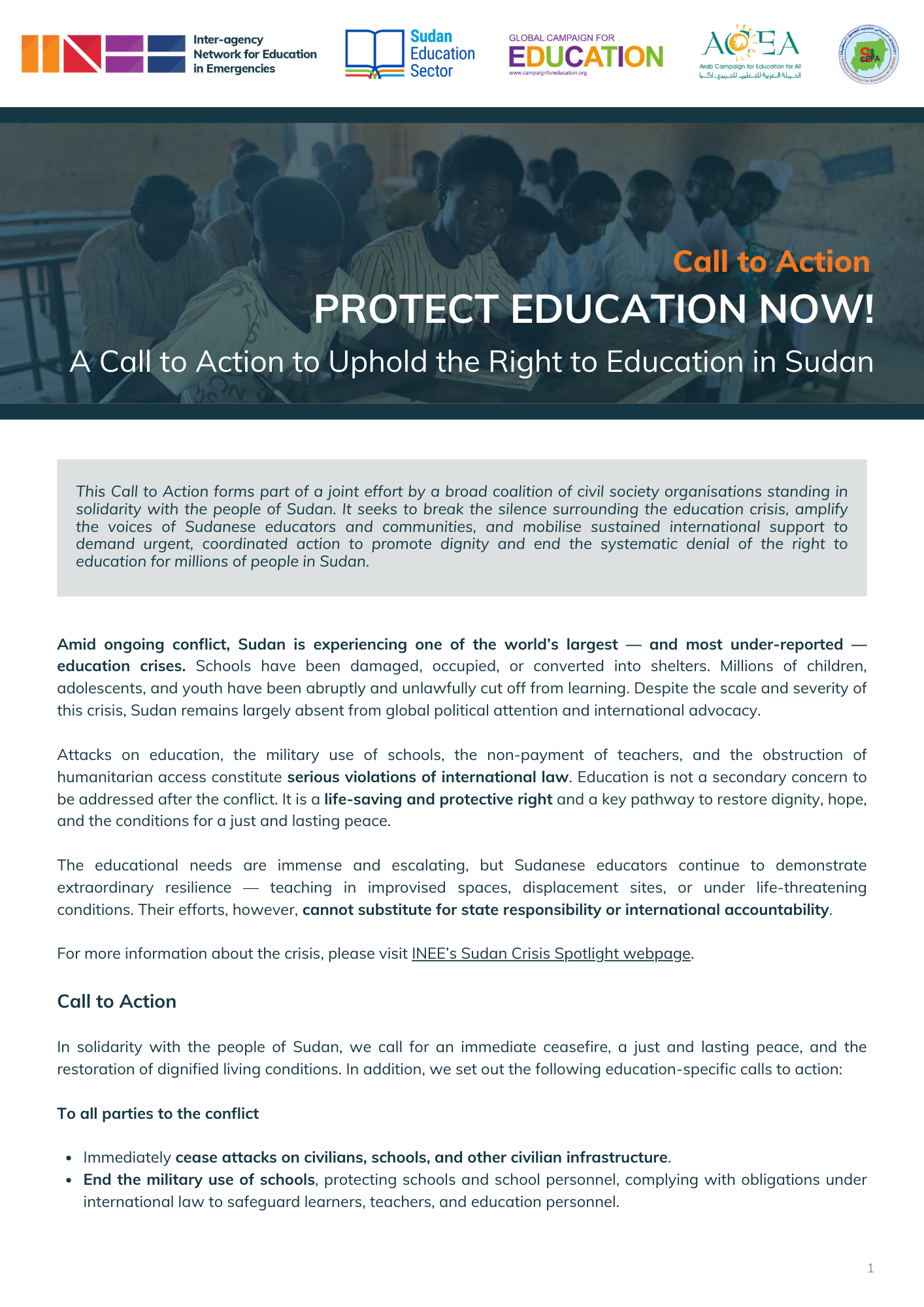 This Call to Action was developed by a broad coalition of civil society organizations standing in solidarity with the people of Sudan. It includes a brief overview of the crisis and a list of recommended actions for a range of education actors in Sudan. This Call to Action seeks to break the silence surrounding the education crisis, amplify the voices of Sudanese educators and communities, and mobilize sustained international support to demand urgent, coordinated action to promote dignity and end the systematic denial of the right to education for millions of people in Sudan.
Click here to access the call to action.
Advocacy toolkit
INEE has developed the following open source advocacy resources, based on inputs from INEE members living and working in Sudan. We encourage you to use this resource to highlight key statistics and messages about the crisis and amplify the voices of teachers, learners, and practitioners in Sudan. We appreciate your support in calling attention to this crisis!
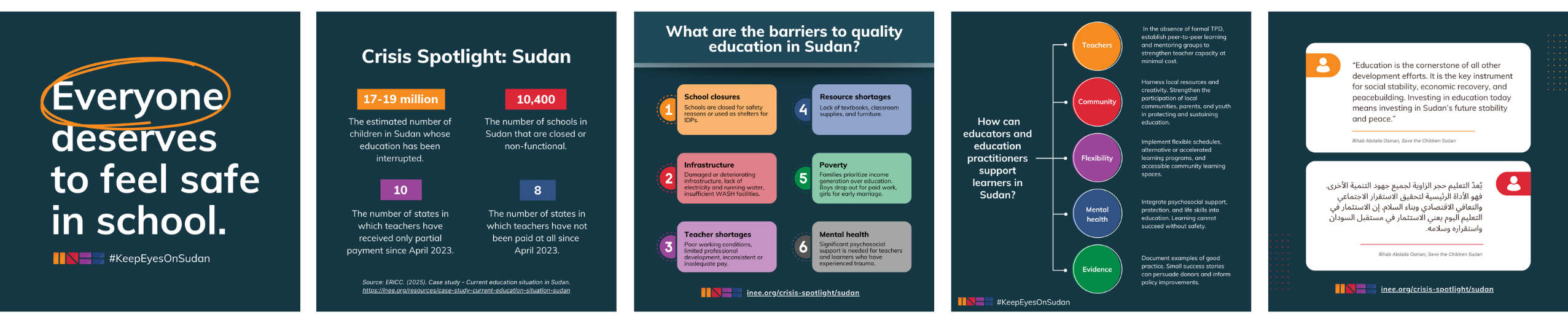
Click here to access the advocacy toolkit in English and Arabic.
Voices from Sudan
In these videos, learners, teachers, and school leaders from Sudan share their education experiences, hopes, and recommendations for a range of education actors.
For more videos, check out our Sudan Crisis Spotlight playlist.
Web event
On 17 February, 2026, INEE, Global Campaign for Education, Sudan Education Cluster, Arab Campaign for Education for All, and Sudanese Coalition for Education for All held an advocacy webinar to:
- Highlight the extent of the abuse and violation of the right to education amidst the ongoing war and displacement.
- Amplify the voices and lived experiences of teachers, school leaders, and local educators working in extremely challenging conditions.
- Provide updated data and analysis based on UNICEF and Education Cluster reports.
- Discuss national and international responsibilities for protecting children’s right to education.
- Promote collective action, improved coordination, and sustained support for Sudan’s education sector.
Click here to watch the recording.
Blog series
The INEE community has submitted blogs highlighting examples of good practice and innovative education programming in Sudan. This blog series is an open space for sharing opinions, resources, developments, and discussions on topics relevant to education in Sudan. If you are interested in contributing a blog to this series, please reach out to [email protected].
- From Classrooms to Displacement: How War Is Disrupting a Generation of Sudanese Students. 26 March, 2026. By Aldouma Abaker.
- Non-Formal Education as a Survival Pathway: What’s Working—and What Must Change—in Sudan. 23 January, 2026. By Jen Steele, Rana Hamza, Dr. Lisa Walker, and Nicky Miles
- Saving Lives Through Learning: How Sudan’s Education Sector Responded to Cholera. 22 January, 2026. By Karin Alexander, Ahmed Elbashir, and Lisa Walker
- For Sudanese refugee women in Uganda, a cup of coffee and a space to speak. 22 January, 2026. By Ammar Yassir.
- Resilience in Crisis: Sudan National Secondary School Exams Amidst Conflict. 14 January, 2026. By Ibrahim Adam Idris.
- The gifts I have been given: Survival as a collective act in Sudan. 8 January, 2026. By Samah Fawzi.
- Social Justice Is Localization: What Refugee-Led Education Initiatives Teach Us. 8 January, 2026. By Lila Rouf.
Note: The opinions expressed in the blog posts included here are those of the respective authors; they do not necessarily reflect the opinions of INEE or its members.
Resources
The following resources support the provision of education, and the psychosocial support and wellbeing of learners, teachers, and those who have been affected by the conflict in Sudan. This list will be updated, as needed.
For information on the humanitarian response in affected areas, visit ReliefWeb. To suggest resources for this crisis, or to request a customized collection of resources relevant to another crisis, contact [email protected]. For EiE technical support, submit an INEE Help Desk request here.
Standards
- Minimum Standards for Child Protection in Humanitarian Action Arabic, English
- INEE Minimum Standards for Education: Preparedness, Response, Recovery Arabic, English
- Comprehensive School Safety Framework 2022-2030 English
Child Protection
- Supporting Integrated Child Protection and Education Programming in Humanitarian Action English
- Communicating with Children About Death and Helping Children Cope with Grief English
- CPHA Frontliner Getting Started Learning Package Arabic, English
- We Thrive Arabic, English
Psychosocial Support
- INEE Guidance Note on Psychosocial Support Arabic, English
- PSS-SEL Distance Education Resources for Teachers Arabic, English
- Psychological First Aid: Dealing with Traumatic Responses in Children Arabic, English
- Communicating with Children About Death and Helping Children Cope with Grief English
Early Childhood Development
- Early Childhood Development Kit for Emergencies English
- Country Profiles for Early Childhood Development: Sudan English
Gender & Inclusion
- INEE Guidance Note on Gender Arabic, English
- EiE-GenKit Arabic, English
- Guidelines on Gender-Based Violence Interventions in Humanitarian Settings Arabic, English
- INEE Pocket Guide to Inclusive Education Arabic, English
- INEE Pocket Guide to Supporting Learners with Disabilities English
- Inclusive Education: What, Why, and How: A handbook for program implementers English
- Humanitarian Hands-on Tool English
Accelerated Education
- Catch-up Programmes: 10 Principles for Helping Learners Catch Up and Return to Learning Arabic, English
- Accelerated Education Decision Tree Arabic, English
- Accelerated Education 10 Principles for Effective Practice Arabic, English
Reports & Case Studies
- Country brief: Sudan’s Education Crisis English
- SUDAN: Children have lost about 500 days of learning due to war in one of the world’s longest school closures English
- Take Home Rations keep Sudanese students connected to learning English
- Sudan conflict and refugee crisis, Multi-country External Situation Report #10, covering the reporting period March-April 2025 English
- Sudan Situation: UNHCR External Update #106 - 3 May 2025 English
- Case Study: Current Education Situation in Sudan English
- Saving Lives Through Learning - How Sudan’s Education Sector Responded to Cholera English
- Sudan: Humanitarian Key Messages (November 2023) English
- Pathways to Learning Recovery in Sudan
INEE exists for and because of its members. We will continue to advocate and respond to disruptions in education, and will actively support those working to ensure that this right is continually guaranteed to all.
This is a living resource. If you would like to submit blogs or resources for inclusion on this page, please reach out to [email protected].
Last updated: 10 February, 2026