


From Classrooms to Displacement: How War Is Disrupting a Generation of Sudanese Students
 My home country of Sudan is facing one of the most severe education crises in the world. Since the outbreak of war on 15 April 2023, millions of children and young people have been denied their fundamental right to learn. What began as a temporary disruption has become a prolonged crisis, leaving millions of students in a state of uncertainty and threatening the future of an entire generation.
According to UNICEF Sudan, nearly 17 million school-age children are out of school. Thousands of schools have been damaged, destroyed, or converted into shelters for displaced families. In many regions, including Darfur and parts of Kordofan, education has completely stopped. Students face psychological stress caused by displacement and insecurity, widening inequalities between those who can continue learning and those who cannot, growing uncertainty as exams and certifications are delayed or suspended. Teachers have also been displaced or left without salaries, further affecting the quality of education. For millions of Sudanese students, education has shifted from a normal part of life to a fragile privilege shaped by conflict and instability.
For me, the war did not just appear in news headlines. It arrived in the middle of my university journey. I was in my final year when the conflict began. Like many students, I was preparing to complete my degree and return to my community to contribute to its development. Instead, everything stopped almost overnight. Universities closed, and I fled to Libya, putting my studies on indefinite hold.
Adjusting to life in Libya as a displaced student, I navigated language barriers, adapted to a completely new environment, faced limited opportunities for in-person learning, and coped with the psychological stress of displacement and uncertainty.
However, my education had already been disrupted long before the war. Since enrolling in university in 2018, Sudan has faced repeated crises, from the political unrest after the 2019 revolution, to the COVID-19 pandemic, and finally the devastating war that began in 2023. What should have been a four-year degree has now been delayed by years of instability.
Despite these challenges, I refused to let the war define my future. I continued my studies virtually, whenever possible, while also engaging in volunteer work and youth leadership activities remotely. Even in the middle of conflict, young people can still contribute, learn, and advocate for the right to education.
My story is not unique. Across Sudan, thousands of children and young people who should have already completed their education are still waiting for schools and universities to reopen. Many have been displaced to neighboring countries, while others remain inside Sudan, unable to continue their learning.
Education as a Lifeline
The education crisis in Sudan is not only about schools being closed today—it is about the long-term consequences if millions of young people remain excluded from learning. When education systems collapse during conflict, the effects extend far beyond the classroom. Entire generations risk losing critical skills, employment opportunities, and the ability to contribute to rebuilding their societies. The longer the disruption continues, the more difficult it becomes for students to return to education.
For Sudanese youth, education is more than a personal aspiration; it is a foundation for recovery, peacebuilding, and long-term development. Sudan’s young generation has already faced years of interrupted learning, and without urgent support, the impact of this crisis will continue to shape the future of an entire generation. Education is not a luxury that can wait for peace; it is a lifeline that must continue even in times of crisis. Every student who continues learning today is a future teacher, doctor, engineer, or leader who will help rebuild Sudan tomorrow.
I call on international partners, governments, humanitarian organizations, and educational institutions to urgently support Sudanese students by expanding scholarships, investing in flexible and digital learning, strengthening teachers and recovery programs, and ensuring education remains a top priority in humanitarian responses.
About the Author
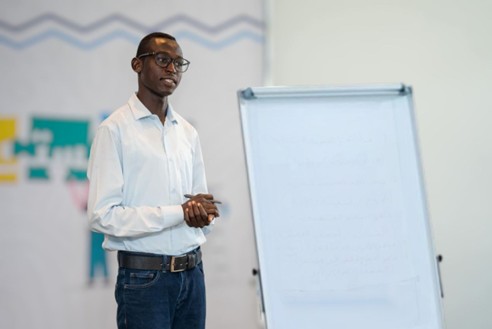
 Aldouma Abaker is a resilient and driven young Sudanese, currently a fourth-year Business Management student. Displaced to Libya by the 2023 war, he continued his studies virtually while actively volunteering and leading youth initiatives.
He has served on the UNICEF Libya Youth Advisory Group, advocating for education and youth development, and is a member of YOUNGO’s Climate Migration Working Group, advocating for the rights of climate-affected migrants. Aldouma is also the National Coordinator for Hult Prize Sudan, where he empowers student teams across universities to develop innovative and sustainable solutions that address real-world challenges.
Born in a village without schools, where he walked two hours daily to attend primary school, Aldouma’s early experiences instilled a lifelong dedication to education, youth empowerment, climate advocacy, and community development.