


Crisis Spotlight: Gulf States (Bahrain, Kuwait, Qatar, Saudi Arabia, Oman, United Arab Emirates)
Crisis type(s): Armed conflict
Background
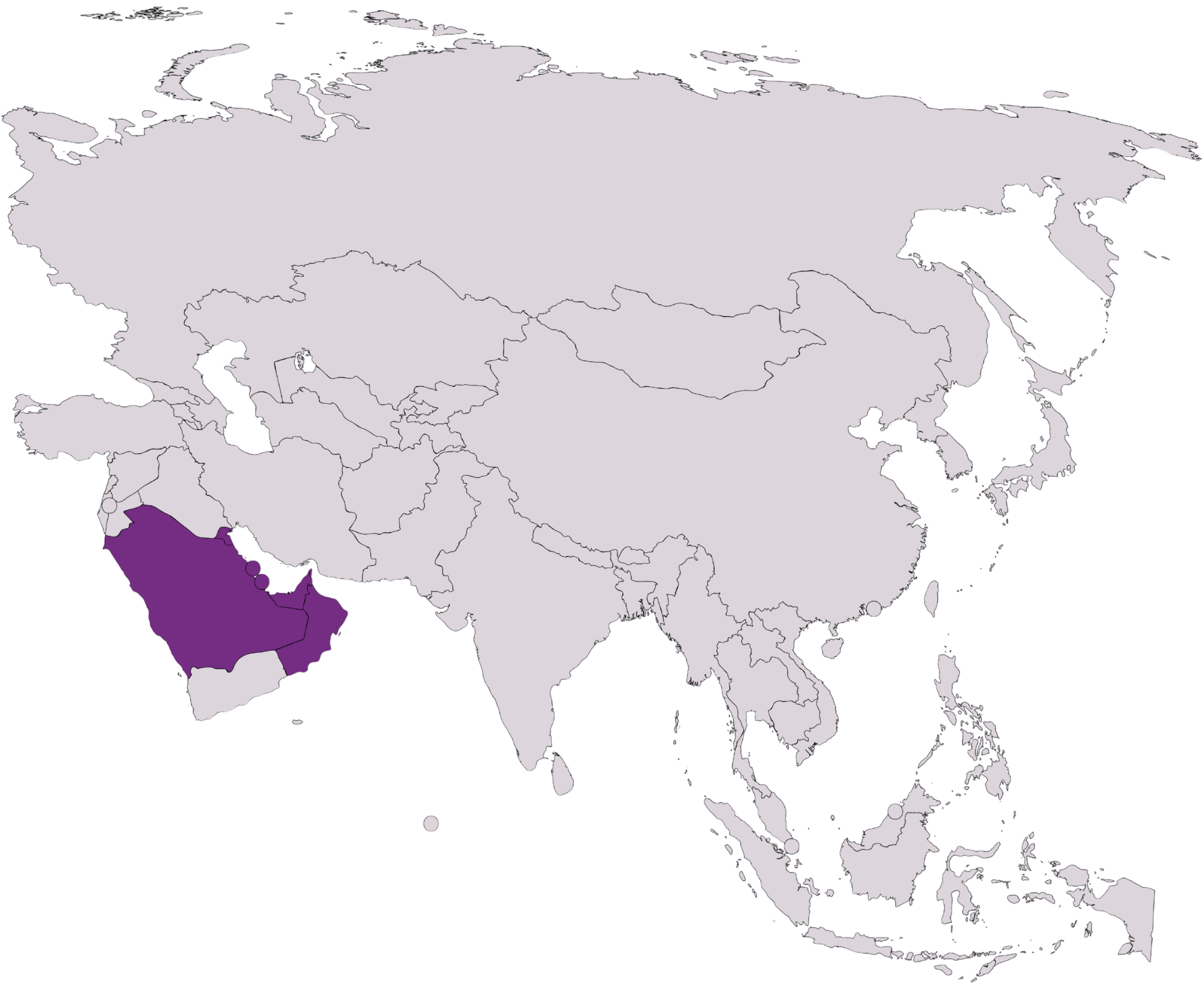 Across the Gulf States, education systems are characterized by strong national investment, robust institutional capacities, and a proven ability to adapt and ensure continuity of learning through proactive planning, regional cooperation, and resilience‑oriented reforms, even in times of uncertainty and external shocks.
Hostilities linked to the U.S.–Israel conflict in Iran, which began on 28 February 2026, have extended to several Arab States, including countries in the Gulf region. The escalation, marked by increased drone and missile attacks on civilian and energy infrastructure, has generated significant security risks across the region.
While the education systems in the Gulf States have not sustained significant physical damage, they have encountered a range of indirect disruptions, including school closures, shifts to online and blended learning modalities, transportation and air travel constraints, the cancellation or postponement of high‑stakes examinations, and elevated levels of stress among both teachers and students.
Key Messages
-
In light of recent regional developments, education systems in the Gulf Region have demonstrated notable resilience; however, the February–March 2026 incidents underscore the importance of continued investment in preparedness and system adaptability.
- Invest in teachers as frontline responders. Teachers are central to education system resilience. Systematic investments are needed to support teacher wellbeing and to strengthen teacher’s ability to adapt their teaching methodologies during crises, including short, flexible training cycles on remote and blended teaching, learner engagement, and trauma‑sensitive approaches. Recent initiatives in the region, such as expanded training for remote learning, highlight the value of proactive teacher professional development in times of disruption.
- Prioritize psychosocial support in national education policies and programming. Psychosocial support is not an additional service. It is a core component of quality education. Education systems that integrate well-being improve learner engagement and outcomes, strengthen teacher resilience and instructional effectiveness under pressure, and help education systems function as stabilizing spaces during instability.
- Expand equitable digital access and inclusion. Efforts to enhance digital infrastructure and access should prioritize equity, with particular attention to lower‑income households, learners with disabilities, and those requiring assistive technologies. Closing digital access gaps is essential to ensuring pre-existing inequalities are not exacerbated by emergency shifts to online or blended learning.
- Facilitate regional knowledge‑sharing and preparedness. Authorities are encouraged to establish a structured regional mechanism—building on existing cooperation platforms—to regularly share preparedness plans, operational guidance, and lessons learned from recent disruptions, enabling peer learning, alignment of emergency protocols, and the continuous strengthening of education system resilience across the Gulf States and beyond.
Web Event
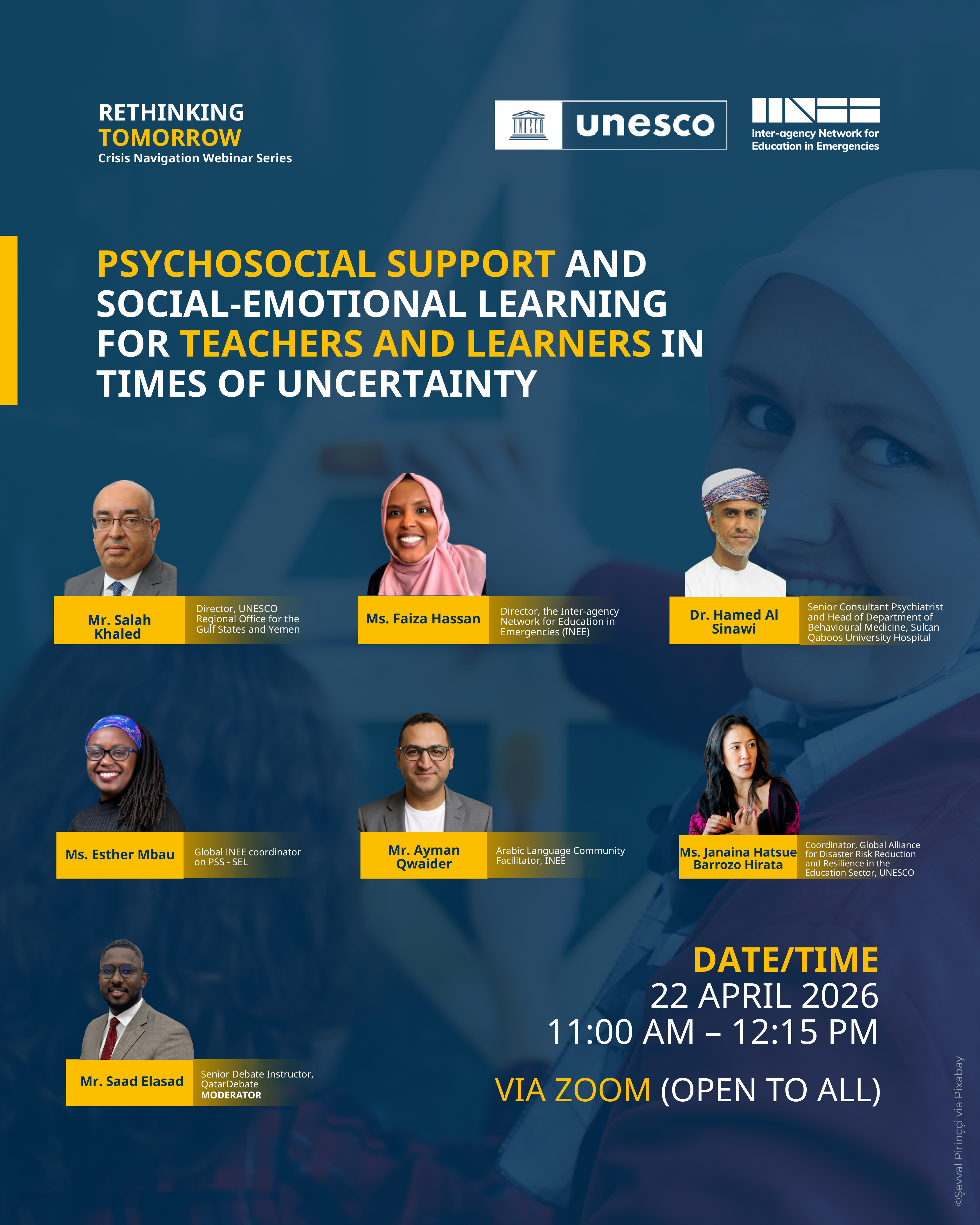 The current Middle East crisis is generating widespread disruptions across education systems in the Arab States. While the Gulf States have not been directly affected by large-scale destruction, they are increasingly exposed to security risks and heightened defense measures. In response, governments have prioritized precautionary actions, including shifting teaching and learning online. Temporary closures and rapid modality shifts are disrupting access to education and affecting the continuity of learning across schools and higher education institutions, including the conduct of high‐stakes examinations.
UNESCO and INEE jointly organized a webinar to explore how conflict, instability, and uncertainty affect the mental health and psychosocial well-being of teachers, learners, and education personnel in the Gulf States, and share promising practices for embedding psychosocial support PSS within education systems.
For key advocacy messages from the webinar, check out Education in the Gulf States: Integrating Psychosocial Support in Education Systems During Times of Uncertainty. This advocacy brief is available in English and Arabic.
Resources
The following resources support the provision of education, and the psychosocial support and wellbeing of learners, teachers, and those who have been affected by the conflict in the Gulf States. This list will be updated, as needed.
For information on the humanitarian response in affected areas, visit ReliefWeb. To suggest resources for this crisis, or to request a customized collection of resources relevant to another crisis, contact [email protected]. For EiE technical support, submit an INEE Help Desk request here.
Standards
- INEE Minimum Standards for Education: Preparedness, Response, Recovery Arabic, English
- Minimum Standards for Child Protection in Humanitarian Action Arabic, English
- Comprehensive School Safety Framework 2022-2030 English
- Guidelines for Protecting Schools from Military Use during Armed Conflict Arabic, English
- INEE Guidance Note on Conflict Sensitive Education Arabic, English
- Planning Education in and after Emergencies English
Teachers
- Guide: What Teachers and Administrators Can Do to Protect Education from Attack English
- INEE Guidance Note for Teacher Wellbeing in Emergency Settings Arabic, English
- PSS-SEL Distance Education Resources for Teachers Arabic, English
- Youm Jadeed episodes and educational guidelines Arabic, English
Child Protection
- Supporting Integrated Child Protection and Education Programming in Humanitarian Action English
- CPHA Frontliner Getting Started Learning Package Arabic, English
- We Thrive, English
- What Schools Can Do to Protect Education from Attack and Military Use English
- Operational Guidance for Child Friendly Spaces in Humanitarian Settings Arabic, English
Psychosocial Support
- INEE Guidance Note on Psychosocial Support Arabic, English
- PSS-SEL Distance Education Resources for Teachers Arabic, English
- Psychological First Aid: Dealing with Traumatic Responses in Children Arabic, English
- Doing What Matters in Times of Stress Arabic, English
- How to talk to your children about conflict and war Arabic, English
- Key online learning resources for the Middle East and Wider Regional Conflict Arabic, English
Early Childhood Development
Gender
- INEE Guidance Note on Gender Arabic, English
- EiE-GenKit Arabic, English
Inclusive Education
- INEE Pocket Guide to Inclusive Education Arabic, English
- INEE Pocket Guide to Supporting Learners with Disabilities English
- Inclusive Education: What, Why, and How: A handbook for program implementers English
- Humanitarian Hands-on Tool English
- Always included: Uninterrupted education for children with disabilities before, during, and after a crisis (November 2023) Arabic, English
Accelerated and Nonformal Education
- Catch-up Programmes: 10 Principles for Helping Learners Catch Up and Return to Learning Arabic, English
- Accelerated Education Decision Tree Arabic, English
- Accelerated Education 10 Principles for Effective Practice Arabic, English
- Guidance on Condensing a Curriculum Arabic, English
- Non-Formal Education Training Arabic
Reports & Case Studies
- UNESCO (forthcoming) Snapshot on the Impact of the Middle East crisis on education in the Gulf States.
INEE exists for and because of its members. We will continue to advocate and respond to disruptions in education, and will actively support those working to ensure that this right is continually guaranteed to all.
 This Crisis Spotlight was developed with the support of the United Nations Educational, Scientific and Cultural Organization (UNESCO)