


Crisis Spotlight: Democratic Republic of Congo, Uganda
Crisis type(s): Epidemic (Ebola)
Background
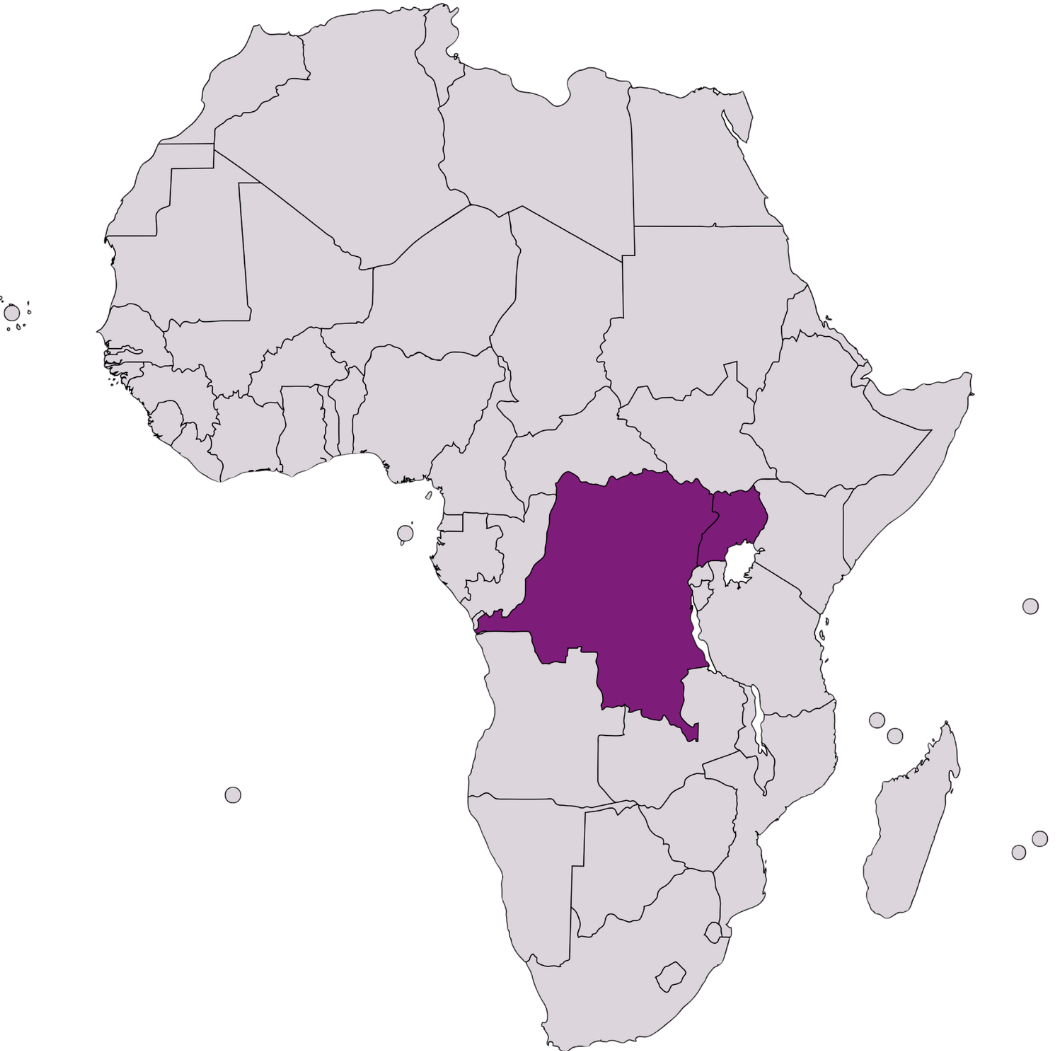 In May 2026, an Ebola outbreak (Bundibugyo species) was confirmed in the Democratic Republic of the Congo (DRC) and Uganda. There is currently no vaccine or specific treatment for Bundibugyo species of Ebola, although work is ongoing to test potential treatments.
Prior to the outbreak, the DRC was already experiencing a severe and protracted humanitarian crisis. The ongoing conflict has significantly affected education – in 2025 alone, 775 schools shut due to conflict in North Kivu, leaving more than 375,000 children out of education. The Ebola outbreak is forcing additional school closures at a “critical moment when children are preparing for their end-of-year exams, threatening not only their health but also their future.”
“A rapid, well-funded, and coordinated response is essential to stop the spread of Ebola, maintain essential services, and ensure that children remain safe, protected, and able to continue learning throughout the outbreak.”
- Dr Babou Rukengeza, Save the Children’s Ebola Response Lead in the DRC
What is Ebola Virus Disease (EVD)?
EVD is a severe, often fatal illness affecting humans and non-human primates. Initial symptoms include fever, fatigue, malaise, muscle pain, headache, and sore throat. These may be followed by vomiting, diarrhea, abdominal pain, rash, impaired kidney and liver function, and internal or external bleeding.
The virus is transmitted to people from wild animals (such as fruit bats, porcupines and non-human primates) and then spreads in the human population through direct contact with the bodily fluids (e.g. blood, vomit, feces) of infected people or people who have died from the disease, and with surfaces and materials (e.g. bedding, clothing) contaminated with these fluids.
Source: World Health Organization, 2026.
Key messages
- Children are especially vulnerable during this EVD outbreak. They make up one in four confirmed deaths and face major indirect consequences such as disruptions of essential education, health, and nutrition services, loss of parents and caregivers, stigma, psychosocial distress, and increased protection risks.
- Schools are effective platforms for sharing lifesaving information about EVD and connecting teachers, learners, and community members with health services. Teachers should be trained to identify symptoms of EVD, share age-appropriate, medically accurate information about EVD transmission and treatment with learners, and follow school protocols on quarantine and contact tracing. Teachers should also receive support and training on supporting their learners’ psychosocial wellbeing as well as their own.
- Schools should have protocols in place to prevent the transmission of EVD, including:
- Methods for identifying EVD symptoms (ex: daily temperature screening)
- Protocols for children, youth, and adults who show symptoms upon arrival to school or who present with symptoms during school hours
- Coordination with healthcare workers for contact tracing and referrals to specialized health services
- Non-discrimination and support for teachers and learners who are returning to school post-quarantine
- Providing alternative learning solutions can ensure children and youth can continue to learn during quarantine and/or school closures. Some examples include distributing home-based learning materials, implementing radio-based distance learning programs, and holding online classes.
- Community engagement is key to successfully controlling an EVD outbreak. Communities should be well informed, both about the disease itself and how to control the outbreak. Community engagement should happen in local languages, led by trusted community leaders, tackling misinformation, and supporting families to stay informed and protected.
Resources
The following resources support the provision of education, and the psychosocial support and wellbeing of learners, teachers, and those who have been affected by the Ebola outbreak in DRC and Uganda. This list will be updated, as needed, on the INEE website.
Resources developed for the 2026 EVD outbreak are marked with a green dot🟢. Resources developed for or adapted from the 2014-2015 Ebola outbreak are marked with a yellow dot🟡. Some resources developed for other outbreaks, such as COVID-19 or monkeypox (Mpox) have also been included, as they contain useful information that may be contextualized to this specific disease outbreak.
For up-to-date information on the situation in DRC and Uganda and information on the humanitarian response in affected areas, visit ReliefWeb. To suggest resources for this crisis, or to request a customized collection of resources relevant to another crisis, contact [email protected]. For EiE technical support, submit an INEE Help Desk request here or contact the Global Education Cluster Help Desk at [email protected].
Standards
- INEE Minimum Standards for Education: Preparedness, Response, Recovery English, French
- Minimum Standards for Child Protection in Humanitarian Action English, French
- Comprehensive School Safety Framework 2022-2030 English, French
- Safe Schools Declaration English, French, Kiswahili
- The Safe Schools Declaration: A Framework for Action English, French
Needs Assessments
- 🟡Example of an Ebola-specific joint education needs assessment - school questionnaire - for schools that closed during a health emergency, Sierra Leone English
- 🟢Analysis of the Ebola crisis in the education sector in DRC, June 2026 French
- 🟢IMPACT_KAP_Ebola_Ecole_RDC questionnaire French. This questionnaire evaluates the level of knowledge and awareness of educational staff regarding Ebola Virus Disease, recommended prevention practices, and response mechanisms, and key information and operational needs.
Preparedness and Awareness Raising
- 🟢DRC Ebola Guidance Note for preparedness and Response to Ebola – RDC Note d'orientation du Cluster Éducation pour la préparation et la réponse à l'épidémie d'Ebola French
🟢DRC Standard Operating Procedures for National exams – RDC Procédures opérationnelles pour l'organisation sécurisée des examens dans le contexte de l'épidemie d'Ebola French - 🟢Community Protection and Resilience, Specific RCCE messages and narratives for Bundibugyo ebolavirus English
- 🟢 DRC Note de synthèse _Positionnement du secteur de lÉducation dans la réponse Ebola French
- 🟢Radio spots for schools on Ebola prevention and protection French, Kinkongo, Lingala, Swahili, Tshiluba
- 🟡Awareness raising materials, posters for Ebola English
School Safety & Child Protection
- 🟡Safe School Environments During the EVD Outbreak English, French
- 🟡Guidance Note: Protection of Children during Infectious Disease Outbreaks English, French
- 🟡 Child Protection and Health, Referral Guidance for Orphans and Other Vulnerable Children English
- 🟡 Guinea Guidance Note and Protocols, Safe Schools Environments during EVD outbreak English
- 🟡 Three Scenarios for the Safe Reopening of Schools - Liberia English
- 🟢 RDC Checklist pour la Réouverture des Établissements en Contexte de Crise French
- Safe Back to School: A Practitioner’s Guide English, French
- Toolkit for Child Friendly Spaces in Humanitarian Settings Arabic, English
Resources for Teachers
- 🟢 Life saving learning, Ebola disease caused by Bundibugyo virus English, French
- 🟡Social Mobilization and Children’s Engagement, Strategies for teachers, Facilitators’ Guide English
- PSS-SEL Distance Education Resources for Teachers English, French
- Social Emotional Learning Distance Learning Activity Pack English
- CPHA Frontliner Getting Started Learning Package English, French
Psychosocial Support
- 🟡Psychological First Aid for Ebola Virus Disease Outbreak English, French
- 🟡Psychosocial support during an outbreak of Ebola virus disease English
- 🟡Psychosocial Support and Guidance and Counselling: A Facilitator’s Guide for Master Trainers English
- 🟡The Mental Health & Psychosocial Network Ebola page English
- INEE Guidance Note on Psychosocial Support English, French
- Psychological First Aid: Dealing with Traumatic Responses in Children English
Gender & Inclusion
- 🟢Protection, Gender Inclusion messages for potential Ebola response English
- 🟡Guidance Note Integrating Menstrual Hygiene Management (MHM) into Ebola Response English, French
- INEE Guidance Note on Gender English, French
- EiE-GenKit English, French
Distance Education
- 🟡Ensuring children continue to learn even in the Ebola Crisis: Proposed Provision of Open/Distance Learning for children in affected countries English
- 🟡Ebola Radio Education Resources English. Folder with various resources from different organizations
- 🟡 Guidance Notes for Small Learning Groups: Home/community based Education English
- Remote Learning Packs English
- Global Digital Library English, French
- Education Radio Knowledge Pack English
Catch-up Programs
These resources were originally developed to respond to COVID but are relevant for any short education disruptions.
- Catch-up Programmes: 10 Principles for Helping Learners Catch Up and Return to Learning English, French
- COVID-19: Pathways for the Return to Learning English, French
- COVID-19 Pathways for the Return to Learning: Guidance on Condensing a Curriculum English, French
Reports & Case Studies
- 🟢Afrique de l’Ouest et centrale : Derniers événements en bref (26 mai - 1er juin 2026) French
- 🟢Ebola outbreak: Acted’s emergency response in the Democratic Republic of the Congo (2026) English
- 🟡The Effect of the Ebola Crisis on the Education System in Liberia (2017) English
- 🟡Program Intervention for the Re-opening of Schools in Liberia (2014) English
- 🟡Wash in Schools, Liberia’s First Steps to recover from Ebola English
- 🟡 Ouverture des établissements d’enseignement en situation d'épidémie de fièvre EBOLA en GUINÉE French
- 🟡 Sierra Leone framework for Ebola response English
- 🟡 Various Monitoring and Evaluation Reports from Ebola English
 This Crisis Spotlight was developed in collaboration with the Global Education Cluster.