


Crisis Spotlight: Haiti
Crisis type(s): Gang violence; natural hazards (earthquake, floods); epidemic (cholera)
Background
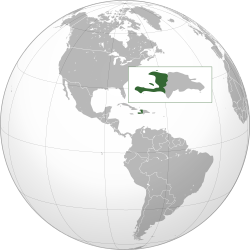 More than 2.7 million Haitians – 1.6 million of which are women and children – are estimated to be living in areas under the control of armed groups, hindering their freedom of movement and access to services like education and healthcare. Over 1.4 million people have been internally displaced – the majority of which (53%) are school-age children and youth.
Many schools have been directly impacted by gang violence. Schools have been closed, occupied by armed groups, or converted into temporary shelters for internally displaced people (IDPs), interrupting education for nearly 500,000 school-aged children and youth.
Haiti’s location in the Caribbean also makes it vulnerable to natural hazards, such as earthquakes (2010), hurricanes (2016), and floods (2025). These disasters have further exacerbated civil unrest and forced displacement, damaged education infrastructure, and interrupted education for Haitian children and youth.
Despite these challenges, education remains a priority for young people. 93% of young people said that schools were essential not just for learning, but as a safe space and a symbol of hope for Haiti’s future.
- More than one in four Haitian children are currently out of school. An estimated 1.2 million school-aged children and teachers are in need of educational support.
- As of 30 April 2025, more than 1,600 schools were closed (1 in 12 nationwide), a 60% increase compared to the beginning of the year. 29 out of 66 municipalities in the North, West, Center and Artibonite departments reported negative impacts on educational infrastructure, including the use of schools as shelters for IDPs and occupation by armed groups.
- Rates of sexual violence against children have skyrocketed (1000%). Port-au-Prince is now “one of the most dangerous places in the world for women and girls.” Violence has also disrupted critical protection services. Safe spaces for women and children have been destroyed, staff displaced, and survivors left without support.
- More than 1.1 million children in Haiti face critical levels of food insecurity. Insecurity, armed group activity, and rising costs are significant barriers to accessing food and humanitarian assistance. The resulting malnutrition impairs learners’ physical and cognitive development and significantly diminishes their ability to concentrate and engage in learning.
- Haiti’s education response remains critically underfunded. As of October 2025, the 2025 UN education appeal (US$62 million) was only 7% funded. As a result, over 1.7 million people risk receiving no assistance at all.
“The impact of insecurity on children’s lives is devastating. It is essential that all influential stakeholders in Haitian society take action to protect students, educators, parents, and the educational infrastructure. Every child deserves the opportunity to return to school and to learn in a safe environment. This is a moment of hope for Haiti, we hold onto hope for Haiti’s children, and we must invest in hope through education.”
- Geeta Narayan, UNICEF Haiti
Call for Contributions
 INEE is collecting inputs for this education spotlight! Here are some ways you can get involved:
Write a blog: Contribute to our new blog series showcasing the challenges and opportunities of teaching and learning in Haiti, and highlighting innovative education approaches, advocacy efforts, and examples of good practice. We’re accepting blogs in English, French, Créole and Spanish. Reach out to [email protected] to share your ideas and for the chance to be featured on the INEE website!
Submit a video or audio clip: INEE is collecting short videos and audio clips of teachers, learners, and school leaders sharing their experiences and hopes for the future of education in Haiti. Click here for some discussion prompts and submission guidelines.
Fill out a survey: Share your experiences of living and working in education in Haiti. What challenges have you experienced? What examples of good practice have you seen? What do you wish people knew about education in Haiti? Your inputs will be used to inform the recommendations on the spotlight page and may be used in an advocacy toolkit. Complete the survey in English, Créole or French by 30 June, 2026. The survey should take 10-15 minutes to complete.
INEE partners in Haiti
The following is a non-exhaustive list of organizations with INEE members in Haiti:
- Association des Femmes Universitaire du Cap-Haïtien
- Fondation Emmaüs pour la defense des droits de l'enfant et du Développement Humain
- Groupe d'action pour Développement d'Haïti
- Hart's Haiti Inc
- Hope for Haiti Future Global Service
- Institut de Leadership et d'Action Humanitaire
- Promotion pour le Développement (PROMODEV)
- Regroupement des Visionnaires pour le Progrès des Jeunes Haïtiens
- Solidarité Laïque en Haïti
- Youth UNESCO Climate Action Network (YoU CAN) Haïti
Use INEE’s Member Directory to reach out to INEE members in Haiti. This database enables INEE members to search for INEE members by location, organization, and skills. Only members who have a public member profile are included in the database.
Note: INEE has not conducted formal vetting or due diligence of these organizations. Their inclusion in this list does not imply endorsement or verification.
Blog series
The INEE community has submitted blogs highlighting examples of good practice and innovative education programming in Haiti. This blog series is an open space for sharing opinions, resources, developments, and discussions on topics relevant to education in Haiti. If you are interested in contributing a blog to this series, please reach out to [email protected].
- Nourishing futures in Haiti: How school meals are building resilience and transforming lives. 5 February, 2026. By Inter-American Development Bank, World Food Programme, and GPE Secretariat.
- Haiti in-depth: As gang violence breeds hunger, Haitians seek homegrown solutions. 21 January, 2026. By Linnea Fehrm.
Note: The opinions expressed in the blog posts included here are those of the respective authors; they do not necessarily reflect the opinions of INEE or its members
Resources
The following resources support the provision of education, and the psychosocial support and wellbeing of learners, teachers, and those who have been affected by the conflict in Haiti. This list will be updated, as needed.
For information on the humanitarian response in affected areas, visit ReliefWeb. To suggest resources for this crisis, or to request a customized collection of resources relevant to another crisis, contact [email protected]. For EiE technical support, submit an INEE Help Desk request here.
Standards
- Minimum Standards for Child Protection in Humanitarian Action English, French
- INEE Minimum Standards for Education: Preparedness, Response, Recovery English, French
- Comprehensive School Safety Framework 2022-2030 English, French
Child Protection
- Supporting Integrated Child Protection and Education Programming in Humanitarian Action English, French
- CPHA Frontliner Getting Started Learning Package English, French
- We Thrive, English, French
Psychosocial Support
- INEE Guidance Note on Psychosocial Support English, French
- PSS-SEL Distance Education Resources for Teachers English, French
- Psychological First Aid: Dealing with Traumatic Responses in Children English
Resources for Teachers
- Bloom Book Library English, French, Haitian Creole
Early Childhood Development
- Early Childhood Development Kit for Emergencies English, French
- Country Profiles for Early Childhood Development: Haiti English
Gender & Inclusion
- INEE Guidance Note on Gender English, French
- EiE-GenKit English, French
- Guidelines on Gender-Based Violence Interventions in Humanitarian Settings English, French
- INEE Pocket Guide to Inclusive Education English, French
- INEE Pocket Guide to Supporting Learners with Disabilities English, French
- Inclusive Education: What, Why, and How: A handbook for program implementers English
- Humanitarian Hands-on Tool English, French
Accelerated Education
- Catch-up Programmes: 10 Principles for Helping Learners Catch Up and Return to Learning English, French
- Accelerated Education Decision Tree English, French
- Accelerated Education 10 Principles for Effective Practice English, French
Reports & Case Studies
- Remote Learning During the Global School Lockdown: Multi-country Lessons English
- INEE Minimum Standards Case Study: Non-formal Education in Haiti English
- Living in and Beyond COVID 19: the Normal Psychosocial and Physical Responses to a Pandemic English, Haitian Creole
- Country brief: Haiti’s education crisis English
INEE exists for and because of its members. We will continue to advocate and respond to disruptions in education, and will actively support those working to ensure that this right is continually guaranteed to all
Last updated: 2 June, 2026