


Crisis Spotlight: Iran
Crisis type(s): Armed conflict
Background
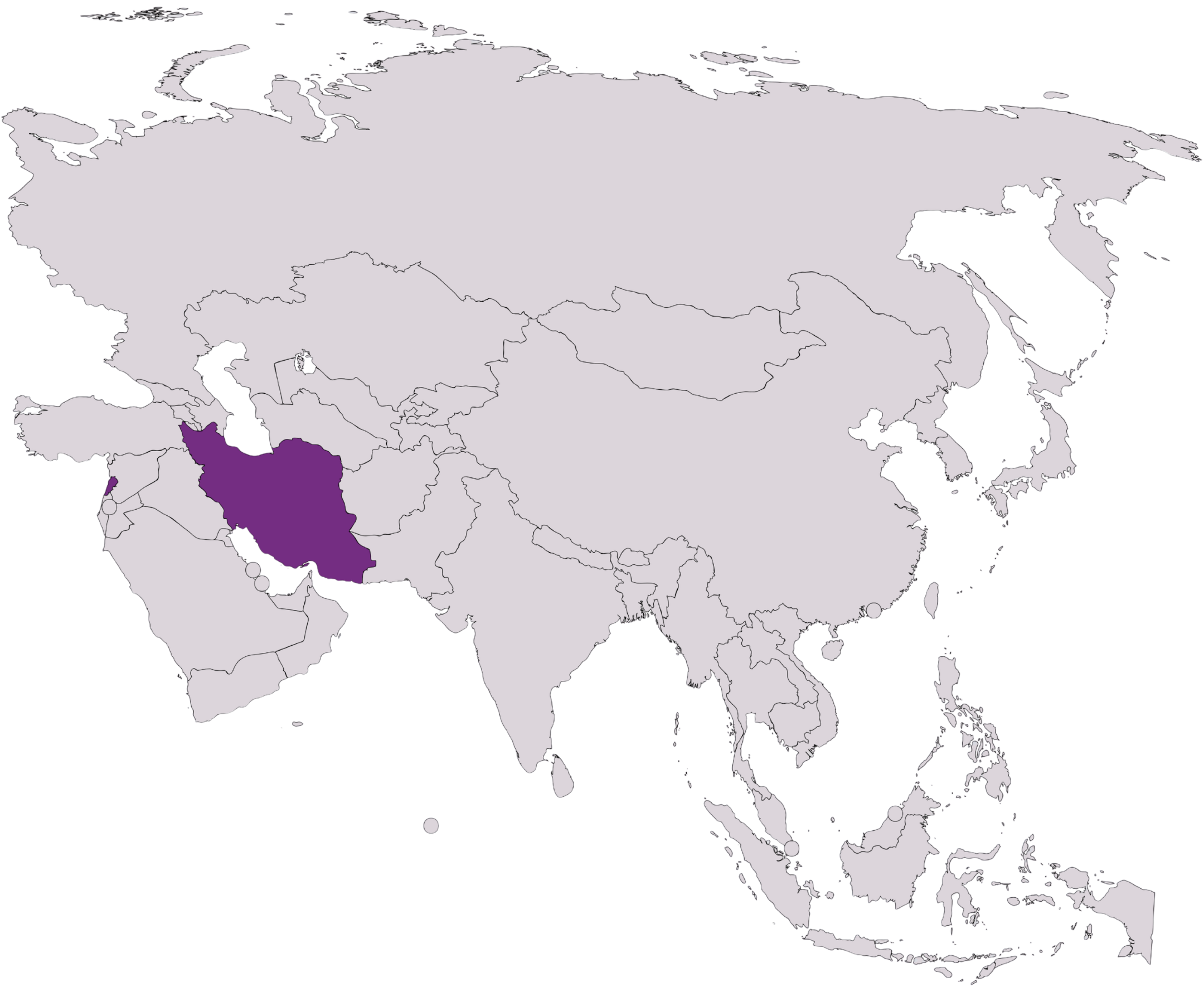 2026 has seen the rapid onset of the US/Israel-led war on Iran. The conflict has since had an escalating humanitarian impact on the region, with Lebanon particularly impacted.
On 28 February, in the early hours of the conflict, Shajareh Tayyebeh girls’ primary school in Minab was struck by a missile. At least 168 people were killed, most of whom were girls under the age of 12. Across Iran and in neighboring states, the sudden escalation of violence - including further attacks on schools - has left hundreds of civilians dead or injured and thousands of students terrified and unable to attend school.
In addition to the recent bombings, education in Iran has experienced a number of attacks, including chemical attacks on girls’ schools, the killing of students during crackdowns on protests, and the detention of teachers and teachers’ union activists. Many of these violations occurred in the context of state security responses and restrictions affecting the education community.
Key Messages
- Schools should never be targets for attack or used for military purposes. Attacks on schools and the killing and maiming of children are illegal under International Humanitarian Law (IHL) and constitute two of the six “grave violations” against children recognized by the United Nations Security Council. Standard 9 (Protection and Wellbeing) in the INEE Minimum Standards encourages “armed forces and armed groups to refrain from locating military objectives (e.g., combatants, weapons depots) near education facilities to reduce the risk of damaging them.” All parties to the conflict should take all possible measures, as required under IHL, to safeguard schools, teachers, and learners. Students in Iran and everywhere must be safe to learn.
- Education is a fundamental human right. Protecting children and young people in times of armed conflict is essential for fulfilling the right to quality education and ensuring their healthy development.
- Where feasible, states should maintain safe access to education during armed conflict, including by working with school and university communities and all other relevant stakeholders to develop gender- and disability-responsive strategies to reduce the risk of attacks, and comprehensive safety and security plans in the event of these attacks. In line with Standard 8 (Equal Access) of the INEE Minimum Standards, education authorities should ensure that all learners and education personnel can safely and equitably access and participate in education without gender discrimination.
- The Safe Schools Declaration outlines a set of commitments to strengthen the protection of education from attack and restrict the use of schools and universities for military purposes. It seeks to ensure the continuity of safe education during armed conflict. To date, 120 states around the world have joined this international political agreement.
- States and international justice institutions must promptly and impartially investigate attacks on education and prosecute those responsible.
Listening Session for Educators in the MENA Region
Monday 16th at 12pm UTC | 3pm UTC+3 (Amman)
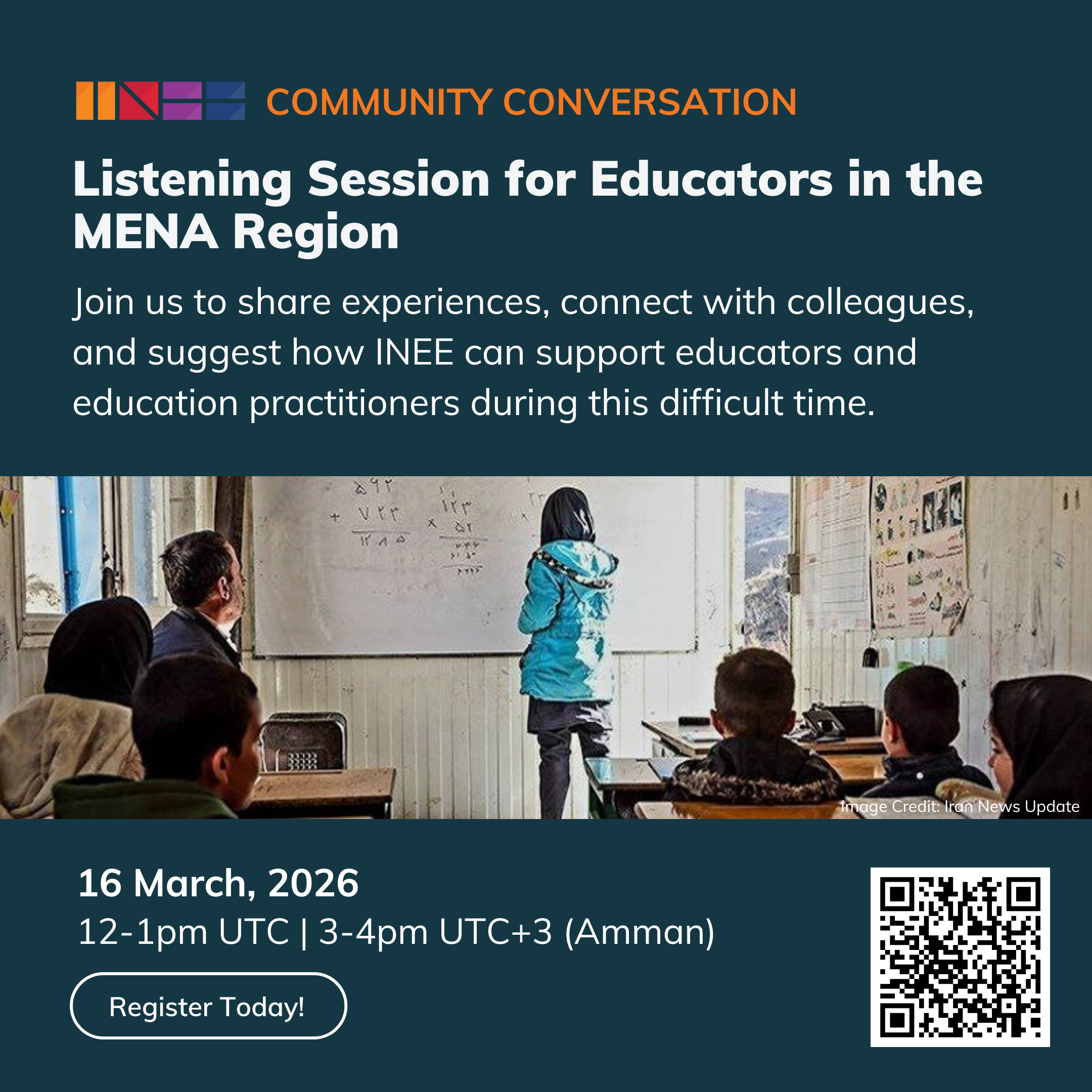 This session aimed to create a safe and supportive space for educators and education practitioners in the MENA region - especially Gaza, Iran, Lebanon, and Sudan - Iran and Lebanon to share their experiences, reflect on challenges, identify immediate concerns affecting educators and learners, and suggest ways the INEE network can support educators’ wellbeing and education continuity during this difficult time.
The listening session took place in Arabic and English.
Resources
The following resources support the provision of education and the psychosocial support and wellbeing of learners, teachers, and those who have been affected by the conflict in Iran and throughout the region. Arabic, English, and Farsi resources have been included so as to be useful in both Iran and other affected countries in the region. This list will be updated, as needed, on the INEE website.
Recognizing that internet access may currently be limited in some contexts, including Iran, INEE encourages members and partners to share these materials through alternative channels where possible.
Standards
- INEE Minimum Standards for Education: Preparedness, Response, Recovery Arabic, English
- Minimum Standards for Child Protection in Humanitarian Action Arabic, English
- Comprehensive School Safety Framework 2022-2030 English
- Safe Schools Declaration Arabic, English
- The Safe Schools Declaration: A Framework for Action Arabic, English
Protecting Education from Attack
- Guidelines for Protecting Schools and Universities from Military Use during Armed Conflict Arabic, English
- Using the Guidelines for Protecting Schools and Universities From Military Use Arabic, English
- Identify and Reduce Risks Related to Attacks on Education English
- Technical Guide: What Teachers and School Administrators Can Do to Protect Education from Attack English
- What can be done to better protect women and girls from attacks on education and military use of educational institutions? English
- Legislative Checklist: Protecting Education in Armed Conflict English
- Toolkit for Collecting and Analyzing Data on Attacks on Education English
Child Protection
- Supporting Integrated Child Protection and Education Programming in Humanitarian Action English
- CPHA Frontliner Getting Started Learning Package Arabic, English
- Toolkit for Child Friendly Spaces in Humanitarian Settings Arabic, English
- Parenting on the Move Arabic, English, Farsi
Psychosocial Support
- INEE Guidance Note on Psychosocial Support Arabic, English
- Psychological First Aid: Dealing with Traumatic Responses in Children Arabic, English
- PSS-SEL Distance Education Resources for Teachers Arabic, English
- Social Emotional Learning Distance Learning Activity Pack English
- Ready to Come Back: Teacher Preparedness Training Package Arabic, English, Farsi
- Key online learning resources for the Middle East and Wider Regional Conflict Arabic, English
Distance Education
- Remote Learning Packs English
- Global Digital Library Arabic, English
- E-learning Kit English
- Social Emotional Learning Distance Learning Activity Pack English
- EdTech for EiE: A Rapid Evidence Review English
INEE exists for and because of its members. We will continue to respond to disruptions in education, advocate for the continuity of quality, safe, and relevant education in emergencies, and actively support those working to ensure that this right is perpetually fulfilled for all without interruption.