


Reimagining Education in Emergencies with Women-Led Organizations at the Centre
When conflict, disasters, or displacement disrupt education, the impact is never equal. Emergencies deepen existing gender inequalities, pushing children further from classrooms that often serve as protective spaces. The risks are clear: School interruptions lead to higher dropout rates for children, with many never returning. Emergencies also heighten exposure to gender-based violence for both girls and boys, including child and early forced marriage, forced recruitment, exploitation, trafficking, and early pregnancies. These risks create particularly significant barriers to education for girls in fragile and conflict-affected settings. Girls are 2.5 times more likely to be out of school and, according to ECW, they account for 52% of the 85 million out-of-school children worldwide.
Education in emergencies (EiE) programs must respond to these realities and be designed in ways that not only mitigate risks but actively empower girls—through safe and inclusive schools, engaged families and communities, menstrual health and sanitation, support for female teachers, flexible learning pathways, and gender-sensitive policies and practice.
Driving Change Through Women’s Leadership in Crisis Contexts
WLOs are best placed to guide emergency response. They bring a unique and vital perspective to identify and respond to the affected population and those who are hardest to reach. As part of the affected communities, they live and breathe the daily realities. With deep-rooted knowledge of social and political dynamics, they are most effective at protecting and promoting the rights of girls and women in a way that is culturally relevant. That close positioning allows WLOs to identify who in the community is most at risk or in need. Their longstanding presence and trusted relationships within communities further enhance their ability to act swiftly and effectively. It is not just about being there; it is about being known, respected, and deeply connected. Knowing whom to engage first, how to navigate cultural nuances, and where the service gaps are can be critical to saving lives and ensuring timely support during emergencies. This also lays the groundwork for more sustainable, community-driven recovery and resilience.
The EMPOWER project
Through the support of Global Affairs Canada and in collaboration with community-based organizations (CBOs) led by internally displaced people (IDPs), Right To Play is delivering the EMPOWER project in northern and central Mali — particularly in the regions of Gao, Mopti and Bandiagara — where insecurity and armed conflict have driven widespread internal displacement and school closures, preventing over two million children from accessing education.
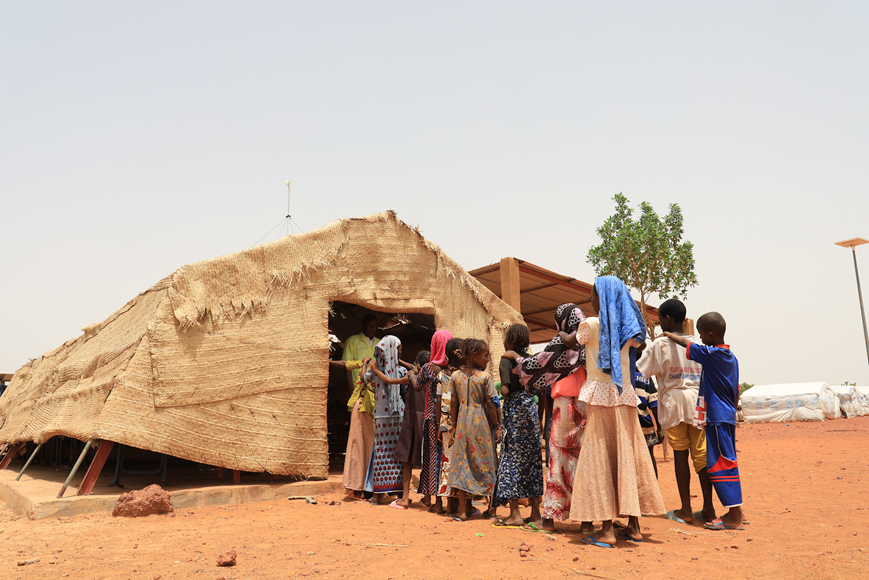
The program uses play-based learning to build literacy and social and emotional skills among internally displaced children. The activities are delivered through grassroots community organizations.
One of these partner organizations is Kawral Association of the Eleven Sites (AKOS) - a women- and IDP-led CBO. During community monitoring, AKOS learned that 12-year-old girl, Kandia, who attends a temporary learning space, was being forced into a marriage against her wishes. In Mali, where 54% of girls are married before 18 and 16% before 15, this risk is all too common.
AKOS responded swiftly, coordinating with the local Directorate for the Promotion of Women, Children and the Family while maintaining open dialogue with the girl and her family. Their timely intervention prevented the marriage. Kandia said “I am glad that this marriage was annulled because I prefer to study and get married when I am old enough."
The case highlights how transparent collaboration between young people, their families, community actors and local authorities is essential for a legitimate and effective response. Crucially, WLOs with sustained support made early detection and prevention possible, enabling coordinated action to serve the needs of girls in emergencies and protracted crises.
Facing Challenges: Budget Cuts to Women-Led Organizations
Aid cuts in 2025 have hit the education sector hard, with humanitarian actors forced to reduce funding requests for education by 33%. In the face of these shortfalls, local actors and communities are already stepping in. But despite the growing recognition of their crucial role in humanitarian response, WLOs remain severely underfunded. In March 2025, UN Women surveyed 411 women-led and women’s rights organizations working in crisis settings to assess the impact of recent foreign aid cuts. The findings were alarming: Nearly half of the organizations expect to shut down within six months if current funding levels continue, and over 70% have already been forced to lay off staff. Many have had to suspend life-saving programs entirely.
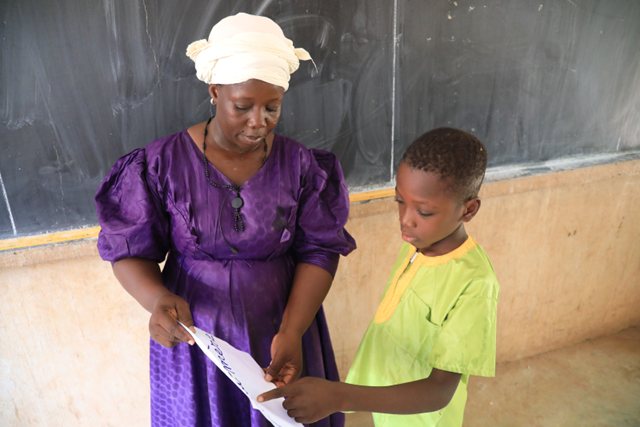
Since WLOs are often at the forefront of reaching the most diverse and underserved groups of women, global humanitarian funding cuts pose a heightened risk to the safety and wellbeing of women and girls - especially those from marginalized communities. This includes women in remote areas, women with disabilities, adolescent girls, and those from minority communities—groups that international actors and mainstream humanitarian systems too often fail to prioritize. Such funding reductions not only restrict access to essential, life-saving services but also exacerbate existing inequalities, leaving the most vulnerable without critical support in times of crisis.
At a time when emergencies are intensifying, such funding cuts risk setting back hard-won gains in gender equality and inclusion. WLOs, like AKOS, are rooted in their communities and play a vital role in identifying and reaching those most in need. They must be intentionally prioritized in funding decisions to ensure their work can continue and grow in the face of escalating crises.
Reimagining EiE
What often gets lost in high-level numbers is the everyday leadership of women, who continue to step into new roles in the face of crisis. These women aren’t just filling gaps—they’re reimagining what education looks like during and following crises. They’re showing us that the most protective spaces for girls are those that are built on trust, community dialogue, and cultural relevance. As the international community pulls back in funding, governments, donors, and education partners must prioritize sustained and meaningful support to these WLOs, or we risk not reaching the girls who could become the leaders their communities need.
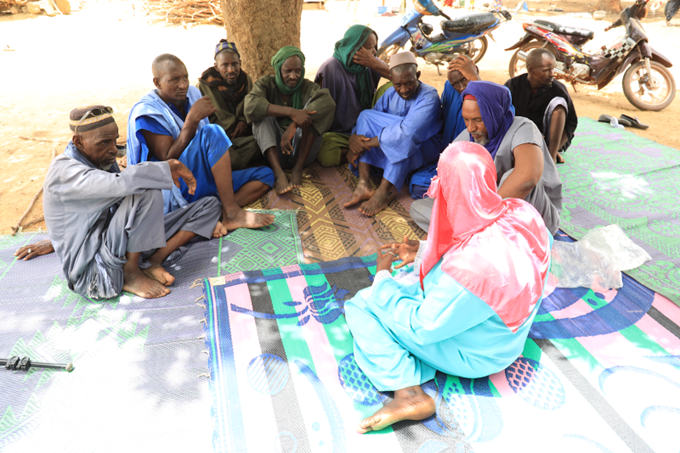
While emergencies often exacerbate gender inequalities, they can also open opportunities for transformation. This moment of change, though deeply concerning, could also serve as a turning point, an opportunity to reimagine a different, more inclusive world.
We reimagine a world where funding systems are accessible to WLOs, where complex donor requirements don’t exclude capable, grassroots groups simply because they cannot complete lengthy applications, yet have the deep local knowledge and commitment to serve their communities effectively.
We reimagine a world where WLOs aren’t just included in humanitarian response, they are the ones shaping and leading it.
And ultimately, we reimagine a world where every woman and girl is supported by her own community to realize her full potential, free from violence, exclusion, or limitation.
About the Authors
 Yazgülü Sezgin is the Global Gender Equality and Social Inclusion Specialist at Right To Play. She is also a PhD candidate in Global Governance at the Balsillie School of International Affairs, Wilfrid Laurier University, where her research focuses on migration policies, refugee protection and gender equality. Her work centers on developing gender-responsive and inclusive programming, with a particular focus on supporting girls and children living with disabilities to access their rights, services, and opportunities. Her prior experience includes working with UNHCR in Turkey as a Senior Field Protection Associate, where she led programs to prevent sexual and gender-based violence, child marriage, and child labor among Syrian refugees. Yazgulu has field experience across the MENA region.
 Myuri Komaragiri is the Global Education in Emergencies Specialist at Right To Play and a doctoral student at the Ontario Institute for Studies in Education (OISE), University of Toronto. Her work focuses on advancing quality education and psychosocial well-being for children in crisis and conflict settings. Her prior experience includes serving as the Education in Emergencies Policy Advisor at Global Affairs Canada and working in the field in settings across Central America and MENA regions. Bridging research, policy, and programming, she is committed to driving evidence-based solutions that improve learning outcomes and holistic development for children affected by emergencies.