


What’s Next for Education in Emergency Settings in Latin America and the Caribbean? A conversation with Ruth Custode, Sussana Urbano and Faiza Hassan


 With global crises on the rise and traditional donor funding shrinking, it’s more important than ever to rethink how we support education in emergencies. In response, INEE jointly with Education in Emergencies (EiE) stakeholders is convening a series of national, regional and global discussions to reflect on What’s Next for the education sector and specifically EiE. What’s Next involves a strategic rethinking of EiE delivery mechanisms and is about reimagining the education sector as one that is led by local actors, who are less reliant on traditional donors, and offering a fresh perspective of what EiE can look like in practice.
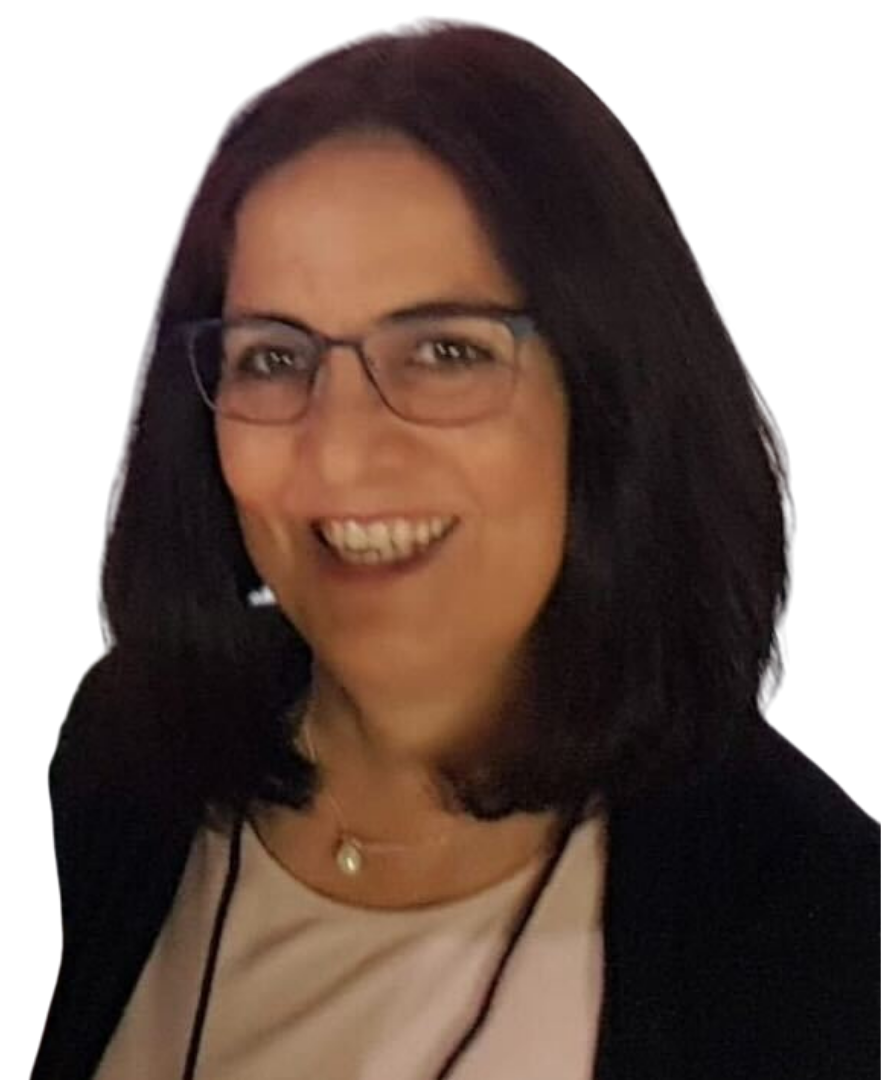
In this conversation, Ruth Custode (UNICEF LACRO) and Sussana Urbano (Save The Children), co-leaders of the Regional Education Group for Latin America and the Caribbean (REG-LAC), and Faiza Hassan, Director of INEE, reflect on the future of education in emergencies and the education sector in the LAC region. Together, they explore how the sector can move from reactive programs to long-term resilient solutions that modify EiE delivery structures to be more locally led and less dependent on traditional donors.
Faiza: Hi Ruth and Sussana, it is a pleasure to connect with you on this important discussion. The field of education in emergency settings is facing many important changes right now, and while the challenges are growing, I think it is also an opportunity to rethink how we approach our work. Let's start with the basics. With the increase of overlapping crisis and the decrease in funding, what do you think is the way forward in Latin America and the Caribbean to address the EiE sector?
Ruth: Thank you Faiza. Definitely, this is a key moment to rethink the role of education in crisis contexts. From REG-LAC, we are deeply concerned about the impact of humanitarian funding cuts, which are already having severe consequences on the education and well-being of millions of children and adolescents in Latin America and the Caribbean. To give you an idea, Save the Children reports that the cuts have disrupted essential health, nutrition and education programs in more than 40 countries, including several in Latin America such as Brazil, and it is estimated that between 8 and 12 million people will be affected by the interruption of these programs, many of them vulnerable children.
It is not only a matter of maintaining educational continuity during an emergency, but of recognizing it as a right that cannot wait, because every day out of school is a day lost in the future of a girl, a boy or an adolescent. Today we face multiple simultaneous crises: disasters caused by natural phenomenons, forced migration, generalized violence, extreme poverty, climate crises, and all of them unfortunately lead to structural exclusion from the education system. In a context of fewer resources, the response must be proportional to this complexity, which implies a change in the way we plan, finance and implement EiE.
We need models focused on the resilience of systems, ensuring access, retention and meaningful quality learning even in the midst of adversity. And this is only possible if education is seen as a priority from the first moment of response, with adequate, sustained and flexible investment. We can no longer improvise. We have the tools, the frameworks and the experience; now we need political will and financial commitment to develop and sustain crisis-sensitive education systems.
Sussana: Thank you also, Faiza. In line with Ruth’s reflection, the region is experiencing a silent educational emergency. The figures are alarming: more than 80 million children and adolescents are outside the education system, millions are displaced by disasters or violence, and there are huge learning gaps. Education is ceasing to be a path to equity and is becoming a reflection of structural inequality. As the World Bank report together with UNICEF and UNESCO points out, after the impact of COVID-19 in our region, it is expected that four out of every five sixth grade students do not reach the minimum level of reading comprehension. This is without taking into account school dropouts, which, according to the OAS, in 2022 in Latin America will reach 19% in primary school and 37% in young people between 15 and 19 years of age.
Current funding is insufficient and unstable. If the EiE sector continues to receive less than 3% of global humanitarian funding, we will not be able to ensure an adequate response. But beyond funding, what is at stake is the recognition of the strategic value of education in crisis contexts, as a vehicle to protect children, to build community resilience and to ensure the continuity of other vital services such as health, water and sanitation, protection or psychosocial support.
At REG-LAC, we work to ensure that humanitarian actors, Ministries of Education and development partners adopt an integrated and multi-sectoral vision. We can no longer think of education as an isolated sector. It is the axis that articulates the response to crisis and must be positioned as such in every plan, budget and decision.
Faiza: I totally agree. There is a lot of talk about the need to change EiE delivery structures so that they are more locally led and less dependent on traditional donors. How does that translate in Latin America?
Sussana: In our region, localization means real empowerment, not just technical decentralization. In many contexts, local organizations are still seen as implementers, not decision-makers. That needs to change. Communities know their needs, their contexts and also their solutions. What they need is access to direct funding, participation in governance spaces and sustained support to develop their institutional capacities.
From REG-LAC we are strengthening national coordination mechanisms, integrating risk management and response to the migration crisis in sectoral education plans and promoting tools such as the Safe Schools approach, which is based precisely on local ownership of the educational process even in crisis. This position does not detract from or seek to eliminate our regional work; on the contrary, it has allowed us to establish a broad vision that seeks to promote and achieve true localization. We have learned that localization requires administrative flexibility, less bureaucracy and more trust on the part of donors and international agencies. For example, directly supporting community actors to design and implement response strategies, establishing risk funds or educational anticipation at the local level, and including local networks in regional decision-making mechanisms can make a significant difference.
Ruth: That's right. Effective localization is not just about transferring functions, but about redistributing and balancing power. To achieve this, we need to fundamentally review the current models of humanitarian funding. Many local organizations do not access funds because of technical barriers, complex administrative requirements or lack of institutional recognition.
Ministries of Education should have a sector preparedness and response fund that ensures rapid and coordinated responses from the first day of the emergency and involves both national and local actors. It is necessary to create education funds adapted to crisis contexts that are accessible to community actors, and that include contingency plans and pre-agreed activation mechanisms. It is also necessary to invest in locally-led monitoring and evaluation systems, so that they can demonstrate impact, generate evidence and scale up their interventions.
The active participation of local stakeholders is not only desirable; it is indispensable to achieve sustainability, cultural relevance and social legitimacy. And as Faiza you mentioned in previous spaces, we must move from tokenism to substance and practice. This means opening space, relinquishing control and betting on transformation from the local level.
Faiza: That's right, and how do you think we can move towards a truly transformative, resilient and sustainable EiE model?
Ruth: First of all, accepting that crisis are not exceptional. They are part of the new educational context. Therefore, we cannot continue designing systems designed for stability. We must design with disruption in mind, and build on resilience. This implies integrating risk management, climate adaptation and migration into education plans from the national to the community level. It also implies diversifying funding sources and innovating mechanisms for protection and continuity of learning: distance education, adapted curricula, alternative safe spaces, psychosocial protection and more. Above all, it means that education must be at the heart of any humanitarian, development and peace strategy. EiE must cease to be the exception and become the new standard for adaptive, learning-centered, community-built education systems.
The Ministries of Education play a central and irreplaceable role in the construction of an EiE model. As governing bodies of the education system, they have the responsibility to lead the integration of public policies that strengthen crisis preparedness, response and recovery. This implies not only guaranteeing the continuity of learning in adverse contexts, but also promoting education systems that are sensitive to crises, with regulatory frameworks, budgets and institutional capacities that prioritize the most vulnerable children and adolescents. Their leadership is key to articulating intersectoral efforts, mobilizing resources and ensuring that education is recognized as a right that must be guaranteed at all times, even in crises.
Sussana: Absolutely. For EiE to be truly transformative, we have to connect immediate action with medium- and long-term priorities. We cannot continue to repeat short-term or fragmented models. We must move towards integrated responses that combine humanitarian action, development and risk reduction. For this reason, REG-LAC promotes alliances between educational, environmental, protection, health and economic development actors. Solutions must be aligned with national priorities, but also have the support of international cooperation and community leadership. Education must be part of climate adaptation plans, early action funds, early warning systems, and sustained investments in people. Only in this way will we guarantee an education that not only survives crises, but transforms them into opportunities for structural change.
Final reflections
Faiza: Thank you both very much, these are very relevant reflections. Much of what we have discussed points to an important conclusion, which is that investing in education in emergency settings is not only an ethical imperative; it is a strategic investment in resilience, social cohesion and sustainable development. In closing, what is the most urgent message that REG-LAC wants to convey today?
Ruth and Sussana: Well, what we want to convey is that, today, in the face of cuts and the redefinition of the humanitarian system, we need courageous decisions. We urge donors, governments and humanitarian actors to prioritize education at all levels of response, planning and funding.
For this reason, a regional education response that is inclusive, safe, multi-sectoral, localized and guarantees the right to learn in protective environments is urgently needed. In the face of budget cuts and new humanitarian priorities, REG-LAC urgently calls on donors, governments and humanitarian actors to:
- Ensure that education is considered essential from the first moment of any emergency response, strengthening the implementation of the Safe Schools approach as a basis for protection and educational continuity.
- Prioritize education in emergencies and education sector risk management in the Humanitarian Needs and Response Plans (HRP) and throughout the strategic redefinition of the humanitarian system in Latin America and the Caribbean.
- Significantly increase investment in education in emergencies and risk management in the education sector by ensuring sufficient funding, with flexible, multi-year and sustained funds to respond to the educational needs of children, adolescents and youth in crisis contexts.
- Recognize the multi-sectoral nature of education in emergencies, whose role is fundamental for the fulfillment of rights ensured through action in other sectors such as health, nutrition, protection, water and community resilience.
- Ensure the active participation of emergency education groups, clusters and networks in humanitarian planning, response and decision-making processes at regional and national levels.
What is the future of EiE?
Check out other blogs in the “Reimagining EiE” series to hear from a range of EiE stakeholders. We also want to hear from you! How do you see education in emergencies evolving? And how can we continue ensuring access to quality education for all children without relying so heavily on traditional donor funding? What are your hopes, aspirations, and plans? If you’re interested in sharing your own insights through a blog, reach out to us at [email protected] Looking forward to hearing from you!