


What Does Meaningful Localization Look Like? A Conversation with Hani Mansourian and Faiza Hassan

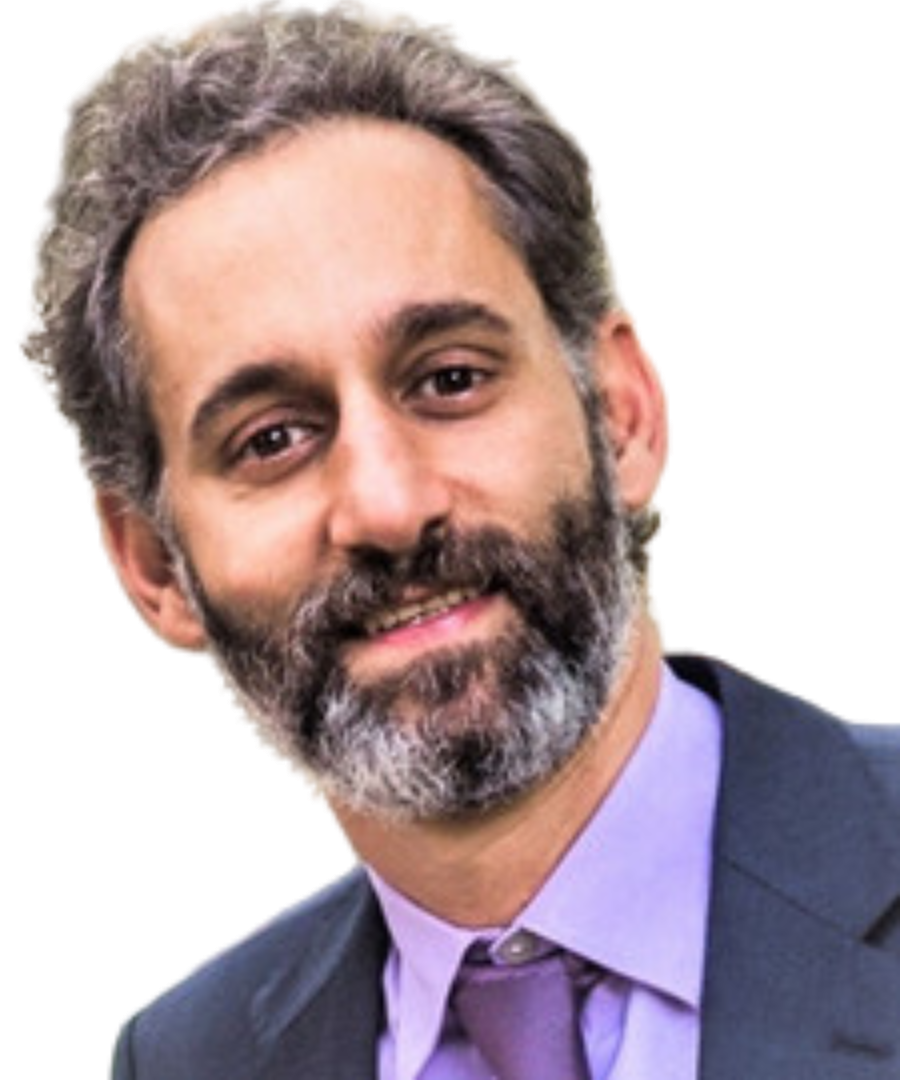 With global crises on the rise and traditional donor funding shrinking, it’s more important than ever to rethink how we support education and child protection in emergency settings. In this conversation, Hani Mansourian, Director of the Alliance for Child Protection in Humanitarian Action, and Faiza Hassan, Director of the Inter-agency Network for Education in Emergencies, explore how to turn the rhetoric of localization into practical change. They discuss how structural reforms can support locally led responses that are better equipped to withstand future shocks.
Meaningful Localization
Faiza: Hi Hani, it’s great to be speaking with you. As donor funding declines, localization is being discussed as the default answer. But the term means different things to different people. To begin: What does meaningful localization look like to you?
Hani: To me, meaningful localization means unleashing the inherent protective power of communities to support one another in times of crisis, to keep their children safe and protected, to support their well-being and recovery from harm. It is not about 'empowering' others—as though that power doesn’t already exist—but about recognizing, enabling, and creating space for community-led action.
Too often, we hear terms like “capacity building” or “empowerment” that suggest communities are starting from zero. But history and lived experience tell a different story: communities have always organized to protect their children and vulnerable members – whether through family tracing, kinship care, or creating safe places for children. They know their realities, risks, and resources best.
Meaningful localization acknowledges that the international community can never care more about a child than the child’s own community does. The role of the international community, then, is to remove the barriers—financial, structural, political—that prevent communities from taking the lead, whether through formal local NGOs or informal but deeply effective social networks.
Faiza: In many contexts, localization still means subcontracting to local actors rather than shifting decision-making power. What would it take to move from tokenism to real leadership by local and national organizations?
Hani: To move from tokenism to genuine leadership by local and national organizations, the international community—including donors—must first confront an uncomfortable truth: much of our current approach remains rooted in colonial dynamics. Despite decades of progress, humanitarian action is still too often framed around external saviors parachuting in, rather than communities shaping and leading their own response.
The existing humanitarian architecture is built on a Western model that privileges international actors—UN agencies, INGOs, and donor institutions—while treating local organizations as subcontractors rather than strategic leaders.
Real change requires a mindset shift, recognizing that:
- Local actors have the greatest stake in the well-being of their children, families, and communities.
- Their operating models are more cost-effective, and they can often leverage local resources and social capital.
- They possess deep contextual knowledge—of language, culture, and political nuance—that international actors can never fully replicate.
- They are present before, during, and after crises, making them essential to both immediate response and long-term recovery.
This doesn’t mean international actors have no role—but it does mean that role must evolve. The path forward lies in redefining partnership as truly equal, with international actors playing a complementary role: sharing power, shifting resources, and trusting in the leadership of those closest to the crisis.
Reforming funding mechanisms
Faiza: A key challenge is that many local actors cannot access direct, flexible, or long-term funding. What donor practices or structural barriers need to change to make direct funding realistic and scalable?
Hani: The first and most critical shift needed is a change in perspective from international funders. Donors—including bilateral agencies, foundations, and intermediaries such as UN agencies and INGOs—must move away from expecting local organizations to reshape themselves to fit externally imposed systems in order to access funding.
This is not to say that due diligence doesn’t matter—it does. But when the starting point of a partnership is, “You must make significant structural changes before we can even consider working with you,” it reinforces a power imbalance and undermines the very notion of partnership.
Instead, funders should ask: How can we meet local and national actors where they are? What systems, support, or adaptations can we offer to make funding more accessible, flexible, and long-term? Real progress will come when the burden of adaptation no longer falls disproportionately on local actors, but when donors take responsibility for transforming their own systems to be inclusive, context-sensitive, and genuinely enabling.
Faiza: Are there any examples, whether pooled funds, social movements, or public financing models, that show how funding can be structured to truly enable local leadership?
Hani: One model that stands out comes from my early experience working with a local NGO in Iran, just after college. This organization made a deliberate decision not to rely on large grants from the government or international donors. Their philosophy was clear: they were from the people, for the people—and therefore, their funding had to remain rooted in the community. They sustained their work primarily through small donations from individuals and local business owners across the country. Occasionally, they partnered with UN agencies or accepted international grants—mainly for early-phase emergency response—but never in a way that compromised their independence.
Because of this funding model, they were not beholden to donor priorities or shifting political agendas. They could exercise genuine local leadership, set their own priorities, and remain accountable to their communities—not to distant funders. It was a powerful example of how community-rooted financing can create the conditions for autonomy and sustainable impact.
National Leadership
Faiza: Governments often sit at the centre of education and child protection systems but are sometimes sidelined in humanitarian response. What role should national governments play in driving locally led education and child protection responses during crises, and what needs to shift for that to happen?
Hani: The humanitarian system has long been guilty of sidelining national governments in crisis response, including in the education sector. While there are contexts—such as when a government is a party to conflict or perpetrating violence against its own people—where engagement must be carefully calibrated, these situations are the exception, not the norm.
In many crises, national governments should be recognized as the central actors in driving education responses. They hold the mandate, infrastructure, and long-term responsibility for the education system. Humanitarian actors—both local civil society and international organizations—should support and reinforce national leadership, rather than replace or bypass it.
Unfortunately, current systems often do the opposite. For example, the cluster system, while effective in many ways, has in some contexts unintentionally undermined government coordination roles. Humanitarian actors frequently operate in silos, establish parallel structures, and implement short-term solutions without aligning with national education plans or systems. This fragmentation not only reduces efficiency but can also weaken national ownership and sustainability.
To change this, we need a paradigm shift in how humanitarian education responses are conceived and delivered:
- Humanitarians must see themselves as accountable to national systems, not just donors or international standards.
- Donor financing should prioritize reinforcing national coordination mechanisms and integrating humanitarian action, including for education, into national plans, even in fragile settings.
- The education sector, globally, should invest in building the capacity of Ministries of Education to lead in crisis contexts, rather than assuming they cannot.
- Finally, we must move away from the assumption that urgency justifies bypassing national leadership. Speed should not come at the cost of legitimacy and long-term impact.
Only by placing governments at the center, where appropriate, can we build truly locally led and sustainable education responses in times of crisis.
Final Reflections
Faiza: Thank you, Hani, for this rich and timely conversation. Any final reflections from you?
Hani: Across these discussions—whether on funding, leadership, or coordination—the thread that runs through is the need for a genuine shift in mindset: from control to trust, from substitution to support, and from parallelism to partnership. Meaningful localization is not about asking local and national actors to conform to international systems; it’s about transforming those systems to meet communities where they are, and respecting the legitimacy and leadership they already hold. Governments must be central in crisis response where possible, and local organizations should be engaged as equal partners, not subcontractors.
To end, I want to return to a vital dimension of localization that is often overlooked: cross-sectoral collaboration. It has always made me uncomfortable that we approach local actors through narrow sectoral lenses—be it child protection, education, or health—when we know that children do not experience crises in silos. During my time working with a local NGO, our approach was always holistic, grounded in the real needs of children and families—not in project categories. As we move forward, I hope the growing calls for cross-sectoral collaboration lead to more coordinated, harmonized approaches to localization across sectoral actors, including the Alliance and INEE. This would not only reduce inefficiencies and fatigue for local actors, but would bring us closer to a model that is respectful and based on true partnership principles.
What’s Next for EiE?
We want to hear from you! How do you see education in emergencies evolving? And how can we continue ensuring access to quality education for all children without relying so heavily on traditional donor funding? What are your hopes, aspirations, and plans? Check out other blogs in the “Reimagining EiE” series to hear from a range of EiE stakeholders. Or if you’re interested in sharing your own insights through a blog, reach out to us at [email protected] Looking forward to hearing from you!