


Strengthening the Capacities of School Leaders: A Key Step Towards a Resilient Education System in Emergencies
On July 10th 2025, VIS_Volontariato Internazionale per lo Sviluppo and Bethlehem University in collaboration with the Palestinian Ministry of Education (MOEHE), had the opportunity to conduct specialized capacity building on crisis management for 30 principals (men and women) leading public schools in Bethlehem Governorate. This capacity building is part of broader efforts to strengthen the Palestinian education system’s ability to respond to the recurring emergencies that the West Bank faces.
Context and Challenges
The Palestinian education system continues to face chronic and daily challenges due to Israeli occupation practices and settler violence, including sudden school closures, the arrest of students and staff, and restrictions on access to schools. According to a recent report, 84 schools across the West Bank, including East Jerusalem, are currently subject to pending demolition orders issued by Israeli authorities. Among the affected schools, 54 are under threat of full demolition, while 30 face partial demolitions. The potential demolition of these educational facilities, which are supported by 1,076 teachers, poses a serious threat to the right to education of 12,855 students, including 6,557 girls.
The role of a school principal under such a context, likewise, extends far beyond administrative responsibilities; they coordinate with stakeholders, mediate community tensions affecting school safety, and make critical decisions to uphold education continuity and safeguarding in a highly volatile operational context.
Purpose and Components of the Capacity Building
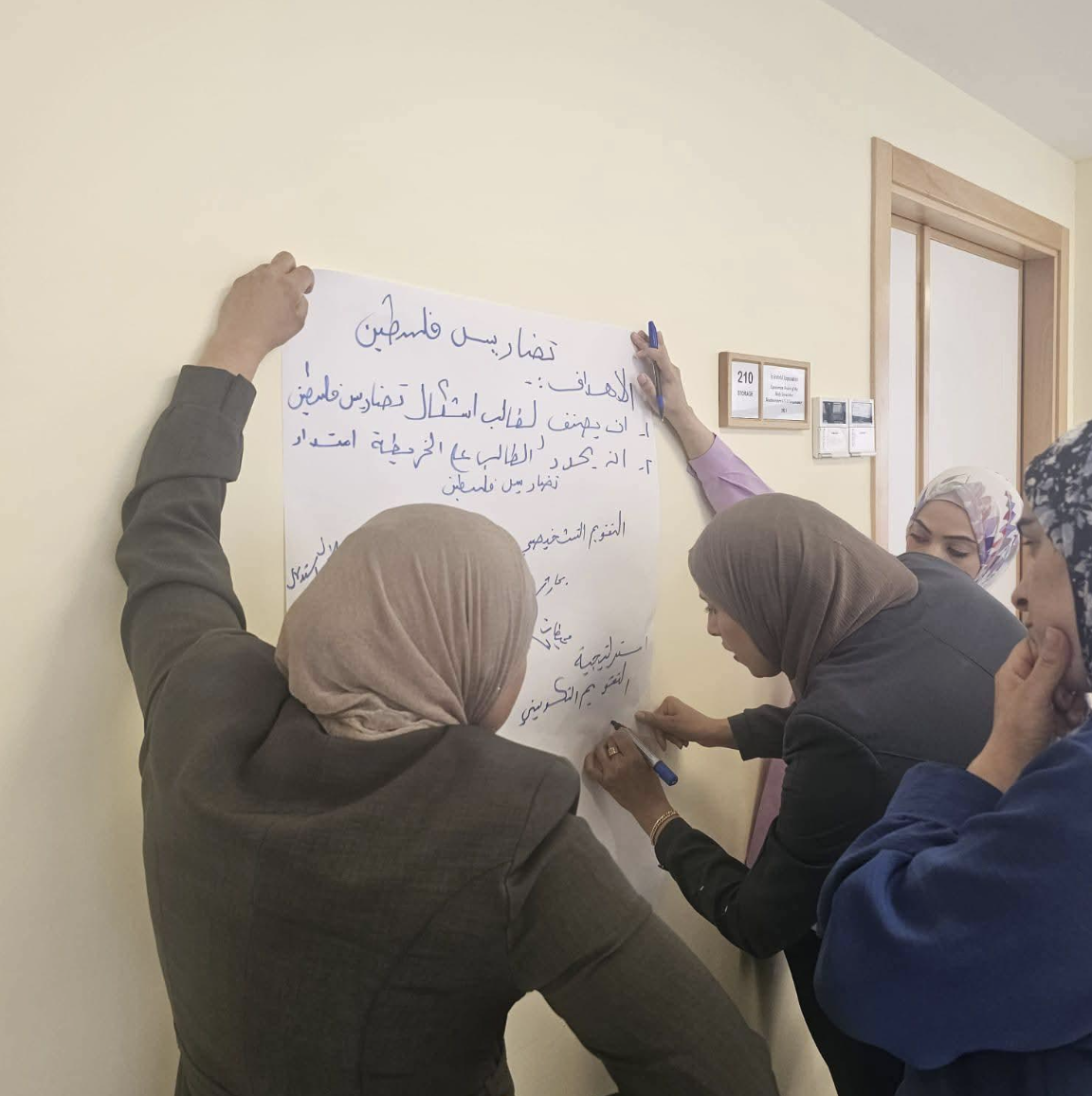
The workshop sought to equip principals with essential crisis management skills through a problem-solving approach to school safety. Core components included, identifying school-related crises and their underlying causes, developing structured and safe responses, restoring balance in school-community relationships after crises, and providing tailored psychosocial and educational support to students and parents in emergency contexts.
Real-Life Examples from the Field
School principals shared powerful perspectives demonstrating courage and creativity despite limited resources.
“As principals, we take personal responsibility, connect teachers, and reach out to parents when necessary. We organize printed materials for children who don’t have access to devices.” (Principal MA, Personal Communication, Bethlehem, 2025).
“Daily, I receive teachers asking me to leave the school because of the routine conflicts with students from one side. Besides, teachers are not receiving their salaries, they do not even have enough money to pay for transportation! As a Principal, what can I do? (Principal DM, Personal Communication, Bethlehem, 2025
“Since COVID-19, we haven’t done much to be ready. We have platforms, but no plans, no
training, and no digital curriculum” (Principal SB, Personal Communication, Bethlehem, 2025)
These stories showed how school principals often take on roles that extend far beyond the school’s walls, becoming active players in sustaining education during crises.
Why It Matters
Building the capacity of school leaders is not a luxury, it is an essential investment to ensure the continuity of education. Without these capacities, students and staff are exposed to greater risks, and schools may remain closed for extended periods. Strengthening the capacities of school leaders is a cornerstone of building a resilient education system in emergencies. Access to education is not just about opening school doors, it is about creating a safe, stable environment where students can continue their education despite the challenges around them. This cannot be achieved without investing in the skills, motivation, and leadership of school leaders. When principals are better equipped with leadership skills they can help teachers when they are stuck professionally and emotionally, they can make better decisions about how to adapt schools to new challenges, and help reduce the impact of the threats taking place outside the school on students and their ability to learn, including frequent military raids and settlers attacks on Palestinian villages.
In every crisis, principals are the front line of protection for children's right to learn. Investing in their leadership skills is investing in hope, protection, and the future of education in Palestine.
----The views expressed in this blog are the authors' own-----