


Rethinking Refugee Children’s Education: Lessons from the Relational Refugee Child Study
The blog draws on insights fromThe Relational Refugee Child: Trauma-Informed and Culturally Responsive Approaches to Educational Inclusion to explore how educational spaces can evolve to ensure refugee children are not only present, but also fully engaged, recognized, and empowered to thrive.
By 2030, the international community aims to leave no one behind by ensuring an inclusive and equitable quality education for all. Yet, millions of children remain excluded from inclusive and meaningful learning, with refugee children among the most marginalized. Despite improvements in refugee school enrolment, there is a limited understanding of whether access to education alone guarantees participation and belonging. This blog, therefore, examines hidden barriers that shape not only the academic performance of refugee students but also their sense of identity, safety, and dignity.
This blog draws on insights from The Relational Refugee Child: Trauma-Informed and Culturally Responsive Approaches to Educational Inclusion, authored by Sarra Boukhari and published in the MDPI Special Issue on Fostering Educational Equity through Linguistically and Culturally Responsive Education.The article, which itself is based on a qualitative study involving 26 sub-Saharan refugee students in Algerian national schools, sheds light on the systemic, social, and emotional barriers that hinder meaningful inclusion. More importantly, it offers practical insights into how education systems can be reimagined and transformed into spaces where refugee children not only have access but also feel a genuine sense of belonging.
Findings from the study revealed that the success of refugee children depends on more than just enrollment. Structural inequalities, subtle classroom practices, and everyday relational dynamics determine whether a refugee child feels included or excluded. Specifically, four critical insights emerge from the piece that lay the foundation for exploring how educational spaces can shift to ensure refugee children are not only present but fully engaged, recognized, and empowered to thrive. These are:
1. Equality is Not Inclusion
Contrary to common assumptions, equality in education does not automatically mean inclusion. Equality often emphasizes providing all students with the same resources or opportunities, whereas inclusion ensures that every learner can participate fully, regardless of their background, language, or abilities. This distinction is especially important for marginalized or refugee students, who often require tailored support to thrive.
At first glance, Algeria’s approach to refugee education from the study appears “fair”: schools operate what Bonilla-Silva refers to as a colour-blind policy where refugee children are legally entitled to attend alongside Algerian nationals. But this assumption of equality often masks passive exclusion. This means refugee students may share classrooms, yet they remain disconnected socially, linguistically, and academically.
From the study, refugee teachers interviewed described refugee children as “choosing” to sit together at the back of the class, reinforcing a narrative of autonomy. In reality, this self-segregation reflected deeper structural forces such as language barriers and lack of support to make them feel included. Refugees were present in classrooms but pushed to the margins. One student, Sami, drew his classroom with himself seated outside the teacher’s line of sight, stating: “I don’t sit there; I sit here at the back.”
The study highlights how “treating all students the same” paradoxically entrenches inequity. Unlike equity-driven inclusion, equality ignores refugee students’ distinct educational needs, cultural identities, and psychosocial challenges.
2. Space Shapes Belonging
Space is more than architecture—it shapes relationships, visibility, and power. In Algerian schools, before the U-shaped seating plan was introduced, classrooms typically had rows of desks with the teacher positioned at the front as the main focus. These arrangements often reinforced exclusion. Refugee children tended to sit at the back, while teachers focused most of their attention on Algerian students in the front rows. What seemed like a simple choice of seating actually reinforced existing social hierarchies.
By contrast, when researchers introduced a U-shaped seating arrangement during arts-based workshops, classroom dynamics shifted dramatically. Students could see one another and collaborate more freely and equally. Refugee children began sitting alongside both peers from their own communities and Algerian classmates, breaking long-standing patterns of segregation. Teachers also observed that these students participated more actively and appeared more confident in discussions.
These examples show that intentional classroom design can disrupt hidden hierarchies. Teacher-centered rows are far from neutral—they consolidate power at the front and push marginalized students, such as refugee children, out of sight. Egalitarian layouts, such as circles or U-shaped arrangements, foster trust, model equality, and encourage relational inclusion.
3. Language is Identity
In Algerian schools, French was the main language used for teaching, and teachers treated it as the 'correct' way to speak. However, refugee students spoke French along with their native African languages, and teachers frequently called it flawed or 'broken.' This focus on 'broken French' made students nervous and discouraged them from speaking or participating in class.
In arts-based workshops, children were encouraged to speak in any language—including their mother tongues and blended ways of speaking. Without being corrected, they shared stories, drew pictures, and expressed their feelings more freely. One teacher even said, “These students, who were usually silent, spoke more in that space than in class.”
Language is not merely a cognitive tool. It is a marker of identity and belonging. Stopping children from using their home languages strips them of their cultural dignity, while encouraging multiple languages helps them feel confident and less anxious
4. Trauma-informed practices enhance healing
Refugee learners often arrive in classrooms carrying the invisible weight of trauma: disrupted schooling, forced migration, family separation, or exposure to violence. These experiences shape how refugees engage with learning. Without trauma-informed practices (creating a safe and supportive learning environment that helps to respond to trauma, stress, diverse learners' needs and well-being, ensuring inclusivity and preventing marginalization), teachers may misinterpret silence, withdrawal, or restlessness as laziness or disobedience, when in fact they are coping mechanisms. Conventional, one-size-fits-all teaching risks re-traumatizing students by demanding compliance without acknowledging their emotional realities.
In Algerian classrooms, this gap was striking. Refugee teachers, though committed, lacked training to recognize the psychological needs of displaced learners. In some cases, when refugee children perceived disciplinary actions as racially motivated, saying, “He did this because I am a refugee, because I am Black”, teachers dismissed these interpretations, not realizing how trauma shapes the way children perceive authority and belonging. Similarly, when teachers gave refugee students a football during recess, expecting them to mix with Algerian peers, the children withdrew instead of joining the game. Rather than recognizing this as a sign of social anxiety and fear of exclusion, teachers dismissed it as a lack of interest.
Implications for Practice
To address these challenges, the following practical steps can help transform classrooms into spaces of genuine inclusion and belonging for refugee children:
- Schools in host communities must move from colour-blind equality to equity-based inclusion, where refugee children’s unique needs are acknowledged, and targeted supports are put in place to ensure their presence leads to participation
- Refugee teachers should treat classroom space as a tool for inclusion. Simple spatial redesigns can redistribute power, increase visibility, and promote a sense of belonging for marginalized learners. Teachers should be trained on the various types of seating patterns in a multicultural classroom.
- Teachers should embrace multilingualism as a strength rather than a deficit. Allowing students to draw on all their languages through translanguaging and creative expression not only improves participation but also affirms identity, reduces anxiety, and fosters belonging
- Refugee teachers need targeted professional development in trauma-informed pedagogy to recognize that silence, withdrawal, or disengagement may be signs of stress and displacement, and not laziness or defiance
Conclusion: From Access to Belonging
The Algerian case uncovers a crucial truth: being physically present in school does not equal belonging. Refugee children can sit in classrooms every day yet remain excluded through spatial marginalisation, linguistic hierarchies, or relational disconnection. Enrollment is therefore only the first step. The task for educators and policymakers is to build systems that recognise this agency, dismantle hidden hierarchies, and offer genuine relational inclusion.
About the Author
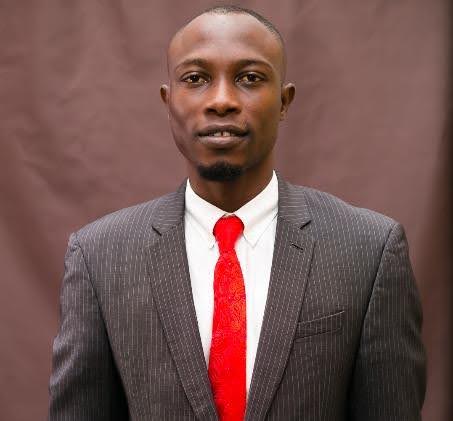 Akinola Odeniyi is an educator, a researcher, and an advocate for inclusive and equitable education. He holds a Master of Arts degree in Global Development and Education from the University of Leeds, UK, through the prestigious Chevening Scholarship. His work focuses on refugee education, teacher development, and access to quality learning for underserved children. As the founder of Greater Minds Initiative, he has led projects that have reached over 1,800 children and youth in Nigeria. His research and practice are driven by the vision of SDG4, ensuring that no child is left behind.