


Lifesaving learning: What is it and why does it urgently need scaling up?
In the first 3 months of 2025, at least 188 children in Syria were killed or injured by landmines and explosive remnants of war - an average of two a day – as more than a million people return to their homes. In Pakistan, floods and heavy rains killed more than 150 children during the monsoon season in July 2024. Around 80% of deaths due to mpox worldwide are children.
As humanitarians, we do all we can to prevent child deaths, by preparing for crises in advance, responding in the acute phases of a crisis, and supporting the recovery. We understand the lifesaving roles each sector plays, and education in emergencies (EiE) is no exception.
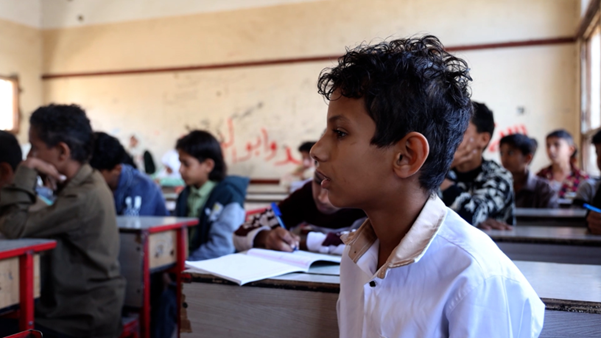
Lifesaving learning is a key part of education in emergencies programming.
Education is a fundamental right for children, that does not end in times of emergency. It is the foundation for social cohesion, peace, economic recovery. Not to mention the hope for the future it gives to children, and what children (and indeed parents) often prioritise in crisis situations.
Delivering education in an acute crisis is often viewed as being about learning maths, literacy, and social skills, which are important for medium- and long-term futures, but not immediately lifesaving. EiE interventions are also recognized as lifesaving through the provision of safe spaces where children are protected from harm and supervised by trusted adults; as a site of multi-sectoral response including referrals to specialised heath and protection services; and through the provision of integrated MHPSS delivered by teachers and other education staff.
In recent years, we are increasingly focused on the very practical way that EiE can provide lifesaving learning for children, adolescents and their families.
Save the Children’s work over decades has shown that while academic foundational skills like literacy, numeracy and SEL are critical for children’s development, children also require specific lifesaving skills and knowledge to keep themselves and others safe during an emergency.
What is lifesaving learning?
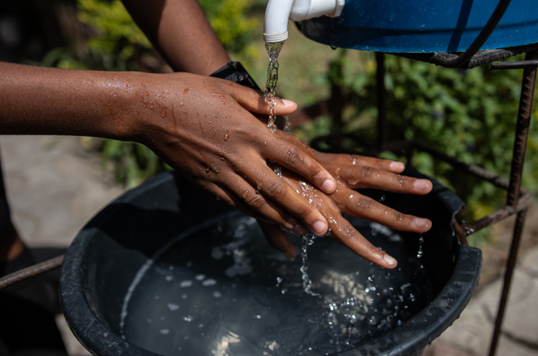
Lifesaving learning provides risk-specific learning sessions which teach children the age-appropriate skills and knowledge they need to avert the direct loss of life and severe physical and psychological harm in the short-term. It is a practical, efficient approach which empowers children and their communities to have agency in their own protection and prevent further deaths and injuries.
In places of conflict this may mean teaching children how to keep safe from unexploded bombs or what to do if there is active shooting. In areas susceptible to climate hazards this could mean learning how to keep safe during a flood or a heatwave. And of course, during the Ebola outbreak in West Africa in 2014-2016, the COVID-19 pandemic in 2019-2023 and current outbreaks of Mpox and Marburg virus disease, this lifesaving learning is focused on children improving hygiene practices to prevent the spread of deadly infections.
These sessions can be delivered in formal or non-formal learning environments or in any physically safe space where children can learn about the risks they face in a crisis and specific measures they can take to keep themselves and those around them safe. These sessions take commonly used Information, Education, Communication (IEC) materials, and focus on a developmentally appropriate and pedagogical approach that is effective and engaging for children. This is an integrated approach which is informed by relevant sectors (Health, WASH, CP, MHPSS, etc) and local knowledge and best practice to ensure that children, adolescents, and their families receive the most up-to-date lifesaving skills and knowledge.
Crucially this lifesaving learning is most effective ahead of a crisis to ensure that children and adults are prepared, but can also be conducted during an escalation in the emergency context or after an acute shock.
What does it look like in practice?
Save the Children has developed a range of age-appropriate tools, guidance, videos and partnerships including with Peppa Pig on a range of different hazards. Lifesaving learning is usually taught and practiced using playful approaches and games. Examples of this include:
- Teaching children to follow instructions of a trusted adult to safely evacuate a learning space (age 3-7).
- Recognising signs of danger and when and how to notify a trusted adult. E.g. how to identify unexploded ordinance or weapons, how to take hard cover when needed (age 8-12).
- First aid such as CPR and stopping bleeding and how to triage someone they see is hurt. Support their families to make a home evacuation plan. (age 13+)
Save the Children is launching a package of materials globally next month – We Thrive – which includes a focus on lifesaving learning, capturing best practice and playful activities to support children ages 4-6, 7-11, 12-14, 15-17 learn key skills to keep themselves and their communities safe.
Why isn’t lifesaving learning prioritised and well-funded?
There is no global, comprehensive mapping of where lifesaving learning is being conducted, who it is being done by, on what themes, and the impact. While national Education Clusters will have an overview of activities being conducted at a country level, there is currently no global, comprehensive mapping of where, how, and by whom for lifesaving learning is being conducted. We do know that currently, lifesaving learning programmes are not delivered on the scale required.
This is due to three major challenges:
1. A lack of funding and prioritisation of education in emergencies by donors overall. Education in emergencies programmes are not well funded from humanitarian budgets. Just 3% of humanitarian funding was allocated to education in 2024 and education sector requirements at national level were only 26% met. These gaps have grown significantly since recent bilateral aid cuts. However education is a major part of a child focused humanitarian response and sadly the needs are rising with 235 million children affected by crisis needing education support.
2. Limited understanding by humanitarians on what lifesaving learning is and its impact. OCHA has enacted stricter boundary-setting processes that have limited the scope of humanitarian appeals, with a stronger focus being placed on funding services that are ‘lifesaving’ (although little global guidance on this has been issued). We argue, alongside many others including the Global Education Cluster and Global Geneva Hub for Education in Emergencies, that education in humanitarian contexts is indeed lifesaving in the short and long term. This is both directly through lifesaving learning programmes and indirectly through integrated programming with other lifesaving sectors such as health, protection and nutrition. These sectors frequently run their child-focused humanitarian services in learning spaces.
3. Challenges in robustly measuring the impact of lifesaving learning. Education in emergencies programmes are rarely designed with the specific purpose of being lifesaving – these programmes typically would not include indicators, targets, or ways of measuring the extent to which they are lifesaving. Within Save the Children, we’re beginning to pilot new indicators in our education in emergencies programmes so that we can understand the lifesaving impact and better communicate this to policy makers and funders. We call on others to do the same and share the findings.
What is the opportunity for action?
Governments and the international community need to recognise that in emergency contexts, education, especially practical lifesaving skills and knowledge delivery, can protect children and their communities. We need to see increased efforts to contextualise, translate, measure and scale these tools so that we can build the evidence base. This would transform how we can prepare for, respond and recover from crisis – putting children and their capacities into action.
There are a multitude of hazards that are increasingly harming children and the fulfilment of their rights. Yet, children are frequently seen as passive with humanitarian initiatives done ‘to them’. But our experience is that children are resilient and want to take more control of their lives; they are motivated and empowered when we support them to learn and practice skills to keep safe. It’s time we equip children with the lifesaving skills we know they are ready to learn—because in a crisis, knowledge isn’t just power, it’s survival.