


Language Learning as a Bridge: Building Peace and Healing Trauma in Education in Emergencies
This article explores two interconnected dimensions of language education in emergencies: its capacity to build peace and its power to support learners in processing trauma. It draws insights and amplifies voices of facilitators and learners from a comprehensive evaluation of the Global English Language (GEL) programme for refugees, displaced people and marginalised groups. The evaluation analysed more than 4,000 survey forms and conducted interviews with facilitators and learners in Ecuador, Kenya and Iraq.
Background
Since 2017, Jesuit Worldwide Learning (JWL) and Cambridge University Press and Assessment (Cambridge) have collaborated to deliver the Global English Language (GEL) programme that has, as of April 2026, served more than 32,000 learners across 100 centres in more than 30 countries. JWL implements the programme and provides facilitators/teachers with training, while Cambridge provides English teaching and learning materials as well as testing for the programme. GEL courses are generally offered at no charge to learners, who are typically responsible only for a minimal share of the operational expenses.
Operating in refugee camps, post-genocide communities and remote areas affected by conflict and poverty, the GEL programme recognises that English proficiency is a critical barrier preventing access to higher education and professional opportunities for the world’s most marginalised populations.
Language Learning and Peacebuilding
Language learning opens doors to cross-cultural understanding and cooperation, both of which are foundational elements of lasting peace. UNESCO’s work on multilingual education (see p.54) demonstrates that in refugee camps and post-conflict settings, where diverse populations must coexist, language learning can facilitate understanding, empathy and communication across boundaries, fostering more harmonious and peaceful communities.
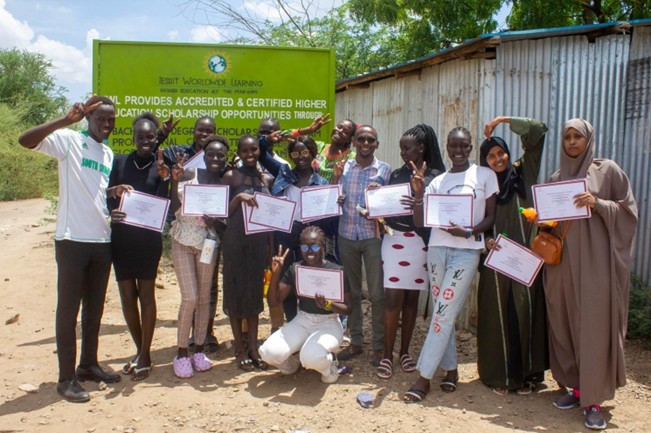
In Kakuma Refugee Camp in Kenya, where the GEL programme is implemented and whereof residents originate from multiple national backgrounds, facilitators recognise that English is not merely an academic subject but a practical necessity for daily cohabitation. For example, a student of the GEL programme used his learning experience to start an organisation in the camp to teach English to more people; he explained, ‘we experienced conflicts in the camp, and the main reasons was language barrier, so we decided to start this initiative to build the community together, to teach people some basic English skills – at least they know how to communicate with others.’ In other words, communities lacking a shared language are more likely to experience misunderstanding that escalate into conflict.
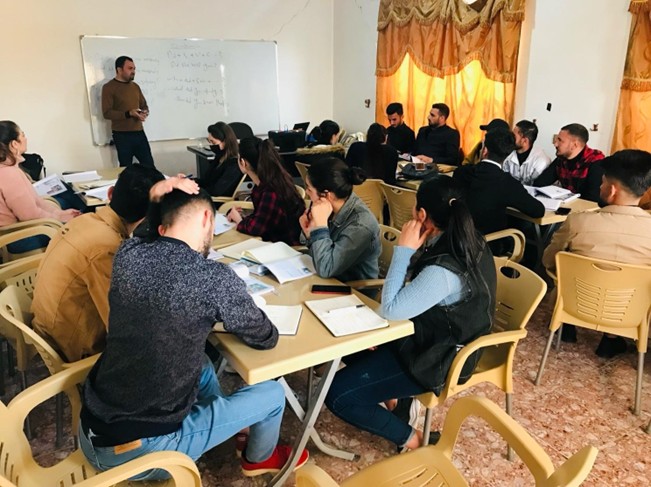
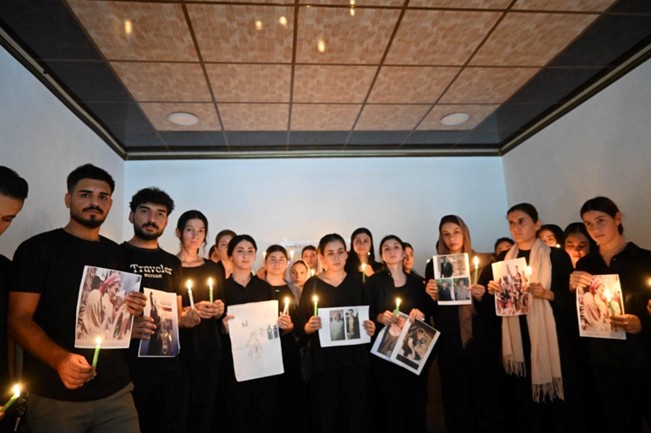
This reality extends beyond functional, day-to-day communication to deeper dimensions of understanding and advocacy. In Sinjar in Iraq, Yazidi learners – survivors of 2014 genocide perpetuated by the so-called Islamic State – pursue English with a determined purpose. These learners view English proficiency as a mechanism to amplify their community’s voice internationally. One student articulated this powerfully: ‘I would like to let people from outside know what happened here… I don’t believe there was much focus on television.’ By acquiring English language skills, Yazidi learners gain agency to narrate their own stories, counteracting erasure of their experiences and fostering understanding among international audiences.
Research corroborates this observation. A report of the British Council documents how language learning facilitates comprehension and communication between people, enhances interpersonal relationships, and strengthens inter-community relations. Beyond communication and with use of well-designed teaching-and-learning materials, language education enables collaborative problem-solving and empathy, both of which are essential for building peace.
Trauma-Informed Language Learning that Supports Healing
Language classrooms in emergency settings must operate with awareness of a more sensitive reality: many learners carry severe psychological wounds. Trauma-informed pedagogy recognises that trauma impacts learning, and it aims to create safe and empowering learning environments by creating emotional safety, building trust, promoting student agency, fostering peer support and collaboration, and supporting learners’ wellbeing. Aleks Palanac identifies specific practices in her article, including: (a) exercising caution with personalisation, such as inquiring about students’ families and childhoods, which may inadvertently trigger trauma; and (b) promoting agency and respect by implementing consistent routines, structures and expectations.
The GEL programme operated along the principles of trauma-informed pedagogy. At community learning centres in Iraq and Kenya, facilitators deliberately create psychologically safe spaces where mistakes become opportunities rather than sources of shame. One learner in Iraq reflected, ‘I was very shy before I entered this course… The teacher gave me the push to speak all free and be powerful.’ Quantitative evidence of the evaluation found that most learners gained confidence in their language-learning journey, and interview data suggest that the confidence gained has helped them overcome trauma. The International Rescue Committee’s Healing Classrooms approach similarly demonstrates how teachers can create safe spaces where refugee children learn and heal.
Language learning also gives refugees and displaced people a space to make new friends with those who can relate to their experiences. A facilitator in the Kakuma Refugee Camp in Kenya explained, ‘people have been traumatised in the countries where they came from, so I believe education is a way to manage some of these traumas… when you come to study, you come together with other people, they share their experiences… some of them give you ways of how they’ve come out of their trauma. It’s a community, so you’re not centred like you stay at home you’re just on your own.’ Furthermore, many GEL facilitators have faced similar hardships as their students, which allows them to empathise more deeply with the learners' experiences.
Good Practices from the Field
The GEL programme evaluation found good practices that help language programmes achieve both peacebuilding and trauma-healing goals.
1. Small group discussions and peer teaching. The GEL programme makes extensive use of small group work, providing learners with opportunities to practise speaking in a supportive, low-pressure setting. This approach not only fosters the development of language proficiency and the rebuilding of interpersonal trust but also encourages students to share personal experiences and engage meaningfully with their peers' perspectives.
2. Meaningful and culturally relevant content: GEL coursebooks (provided by CUP&A) integrate topics ranging from global citizenship to local challenges, encouraging learners to discuss issues relevant to their lives and communities. For Yazidi students, the engagement with the content facilitated their discussions of community concerns and their envisioning of futures.
3. Facilitator support and encouragement: GEL learners consistently identify facilitators as the most effective aspect of the language-learning programme. JWL provides initial and on-the-job training as well as peer-to-peer support to GEL facilitators, so that they can better utilise trauma-informed pedagogy in classrooms.
Conclusion
In emergency contexts, language learning transcends the conventional role of literacy development. When designed with trauma-informed principles and oriented towards community understanding, language programmes become vehicles for healing and peacebuilding. They offer displaced and traumatised learners opportunities to reclaim voice, rebuild trust, process suffering and envision futures.
About the Authors
Dr. Alvin Leung is Senior Impact Evaluator at Cambridge University Press & Assessment. He previously worked as a consultant and has conducted evaluations of large-scale projects for UNICEF and various UN agencies. He also worked as a qualified teacher and journalist. He holds a Ph.D. and an M.Phil. in Education and International Development from the University of Cambridge.
Dr. Brigita Séguis is Head of Impact Evaluation at Cambridge University Press & Assessment, where she leads large-scale educational research and evaluation projects with Ministries of Education, universities, schools, and NGOs. Her work focuses on evidence-based policy and practice in education. She holds a D.Phil. in Linguistics from the University of Oxford.